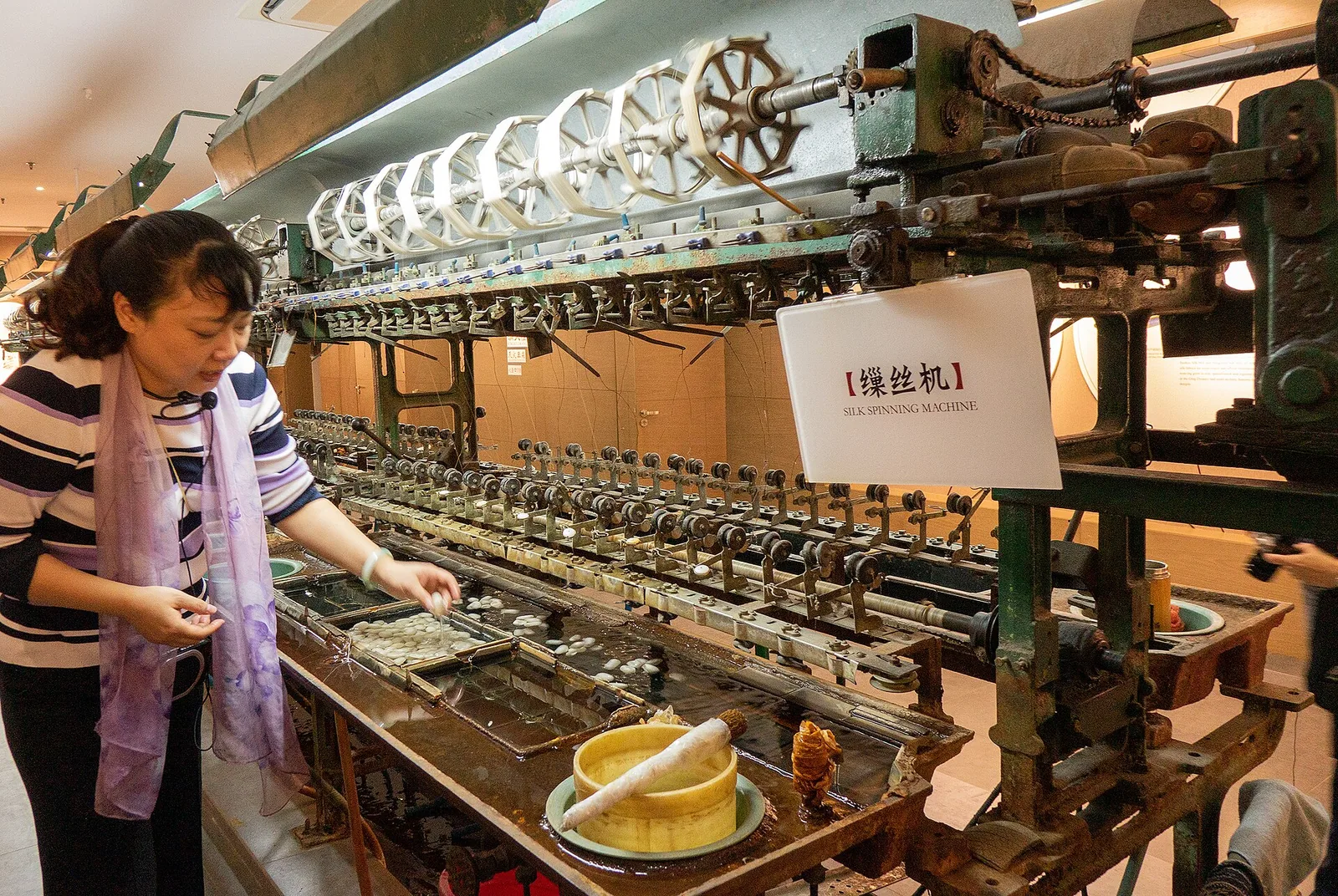
Suzhou’s identity was built on silk. The city was a production centre for centuries, and the canals carried raw silk and finished cloth to the Grand Canal and beyond. The industry still exists, but it is smaller, and the tourist shops sell a lot of polyester labelled as silk. Learning the difference is worth an hour of your time.
Real silk is not a luxury brand; it is a fibre. It comes from the cocoon of the silkworm, and it has a specific hand: cool to the touch, slightly grippy, with a soft lustre rather than a hard shine. It drapes. It breathes. It wrinkles. Polyester imitates the shine but not the feel.
How to tell
The simplest test is touch. Rub the fabric between your fingers. Real silk feels cool and slightly resistant, like a fine powder. Polyester feels slick and warm. Hold it up to the light: silk has a soft, uneven lustre; polyester is uniformly shiny. Ask about the weight and the weave. Real silk is often sold by weight or by the metre, and the price reflects it.
The burn test is definitive, but you cannot do it in a shop. A small fibre sample of real silk burns slowly, smells like burnt hair and leaves a soft ash. Polyester melts, smells like plastic and leaves a hard bead. If a seller offers a burn test, watch carefully. If they refuse, walk away.
| Test | Real silk | Polyester |
|---|---|---|
| Touch | Cool, grippy | Slick, warm |
| Shine | Soft, uneven | Hard, uniform |
| Burn | Ash, burnt hair | Melts, plastic |
| Price | Higher | Very low |
| Drape | Fluid, weighted | Stiff or slinky |
Where to buy
The Suzhou Silk Museum has a shop with reliable products and clear labels. Established silk shops in the old town are also good, especially those attached to workshops. Buy from a place that can explain the weave, the weight and the origin. Avoid street touts, “factory outlets” with no address, and shops that pressure you to buy quickly.
Prices vary widely. A silk scarf might be 200–800 CNY; a embroidered piece can be thousands. Do not expect a bargain. Real silk is labour-intensive, and Suzhou embroidery is a skilled craft. If the price is implausibly low, the material is not silk or the embroidery is machine-made.
Why it matters
Suzhou’s silk and embroidery are not just souvenirs. They are a living craft, supported by museums, workshops and a few remaining factories. Buying real silk from a reputable source supports the craft. Buying fake silk from a tout supports nothing but the tout.
The Silk Museum is the best place to learn. It explains the life cycle of the silkworm, the history of the industry, and the difference between weaves. Visit before you shop. You will spend less and buy better.
Questions people ask
How can I tell real silk from fake silk?
Real silk feels cool and slightly grippy, with a soft lustre. Polyester feels slick and shiny. A burn test is definitive: silk leaves ash, polyester melts.
Where should I buy silk in Suzhou?
The Suzhou Silk Museum shop, established silk shops and workshops. Avoid street touts and unnamed “factory outlets”.
Is Suzhou silk expensive?
Real silk is not cheap. A scarf might be 200–800 CNY; hand embroidery can be thousands. Very low prices usually mean fake material or machine work.