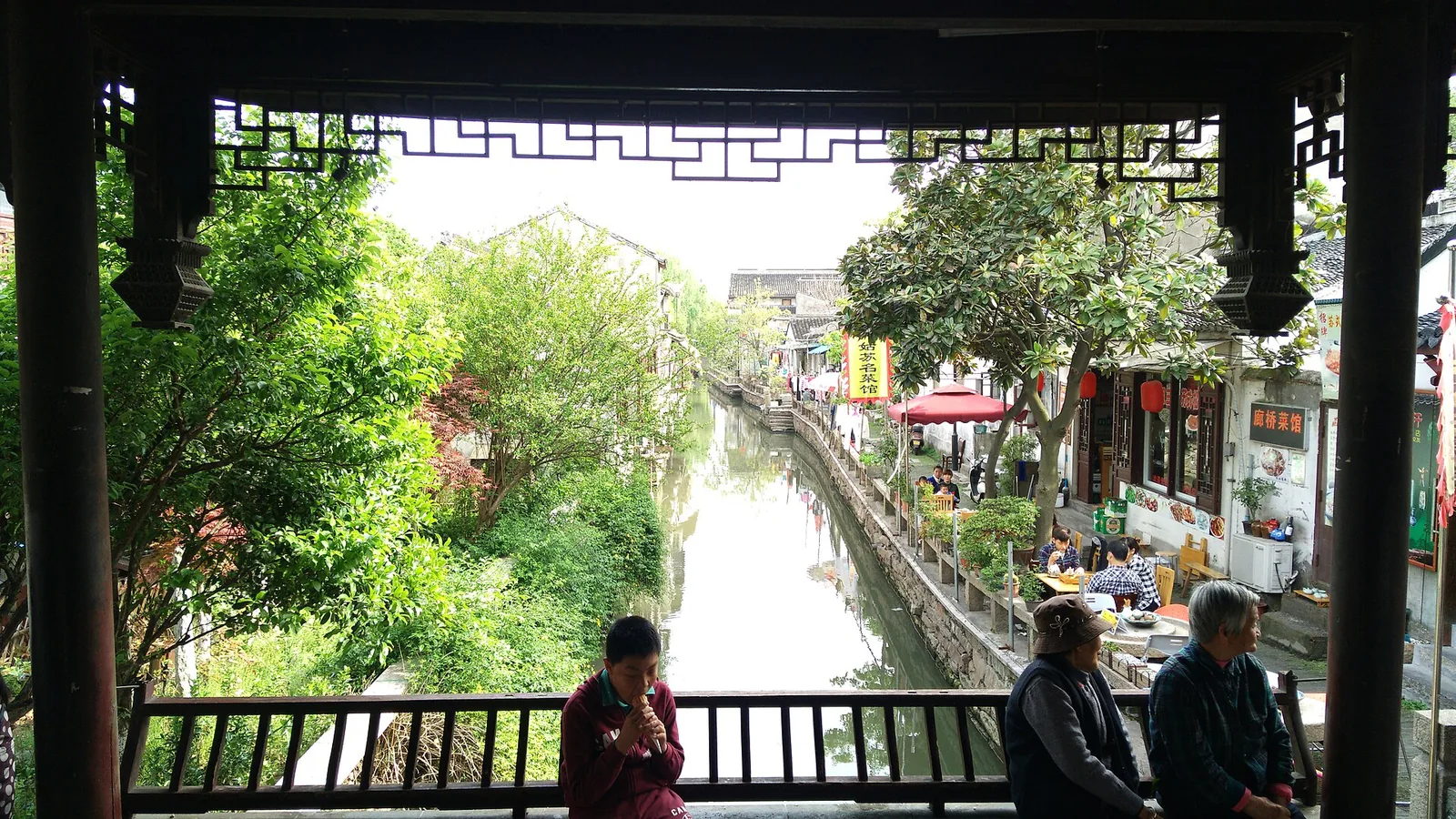
Suzhou confuses first-time visitors because it does not announce itself. There is no single monument, no skyline that explains the city, no obvious route. The famous gardens are hidden behind white walls. The canals are in the old town, not the new city. The best food is in plain shops. If you arrive expecting a tourist site, you will spend the first day looking for the entrance.
The city has two centres. The old town — roughly inside the moat — is low-rise, canal-lined, and built around gardens, temples and lanes. The new city, especially around Jinji Lake in the east, is glass towers, malls and wide roads. Most visitors should base themselves in the old town and treat the new city as an evening or rainy-day diversion.
What surprises people
- The gardens are small. The Humble Administrator’s is the largest, and it is still a walled enclosure you can walk in 90 minutes.
- The famous streets are commercial. Pingjiang Road and Shantang Street are pretty, but they are lined with shops selling the same snacks.
- The city is quiet at night. Outside a few restaurant streets and the lake, Suzhou sleeps early.
- English is limited. Hotel staff usually manage; taxi drivers, shopkeepers and museum guards often do not.
- Cash is awkward. Alipay and WeChat Pay dominate; set up one of them before you arrive.
- The heat and cold are both humid. Suzhou is not a dry city, and the dampness changes how you dress.
A first day that works
Book the Suzhou Museum for late morning and the Humble Administrator’s Garden for opening. Start at the garden at 7:30, when the tour groups have not arrived and the light is soft. Walk slowly: the garden is designed as a sequence of framed views, not a circuit. Leave by 9:30 and walk to the museum. The museum is free but timed; your passport is your ticket.
Eat noodles for lunch near the museum. In the afternoon, walk Pingjiang Road north to south, then take a canal boat if the weather is good. Stop for tea. In the evening, eat near the old town and walk home along the canal. That is enough for one day. Do not add Tiger Hill.
What to skip on a first visit
Skip the water towns unless you have a third day. They are pretty but slow to reach, and they duplicate the canal experience. Skip Tiger Hill unless you are a pagoda person; it is crowded and the garden is less interesting than the famous ones. Skip the Silk Museum if you are short on time; it is good, but the gardens are the reason you came.
Do not try to see four gardens in one day. They blur. One garden in the morning and one in the late afternoon is the maximum. The second garden should be smaller and quieter: the Couple’s Retreat, Canglang or the Garden of Cultivation.
Practical basics
The metro is clean, cheap and bilingual. Buy a single ticket from the machine or scan Alipay. Taxis and DiDi are cheap; use DiDi with the English app if you do not speak Chinese. The high-speed train from Shanghai takes about 25 minutes from Hongqiao. The airport transfer is the only awkward part; see the getting-there guide.
Set up Alipay or WeChat Pay with your foreign card before you arrive. It will save you hours of confusion. Carry a little cash for small shops, but do not rely on it. Download a VPN if you need Google, WhatsApp or Instagram; they are blocked in China.
Questions people ask
How many days do I need in Suzhou?
Two nights is the minimum for the old town and one garden. Three nights lets you add a water town or Tiger Hill without rushing.
Is Suzhou easy for non-Chinese speakers?
Manageable but not easy. Hotels and museums usually have some English. Taxi drivers and small restaurants often do not. Use a translation app and DiDi.
Where should I stay on my first visit?
The old town, near Pingjiang Road or the museum. It is walkable, atmospheric and close to the main sights.