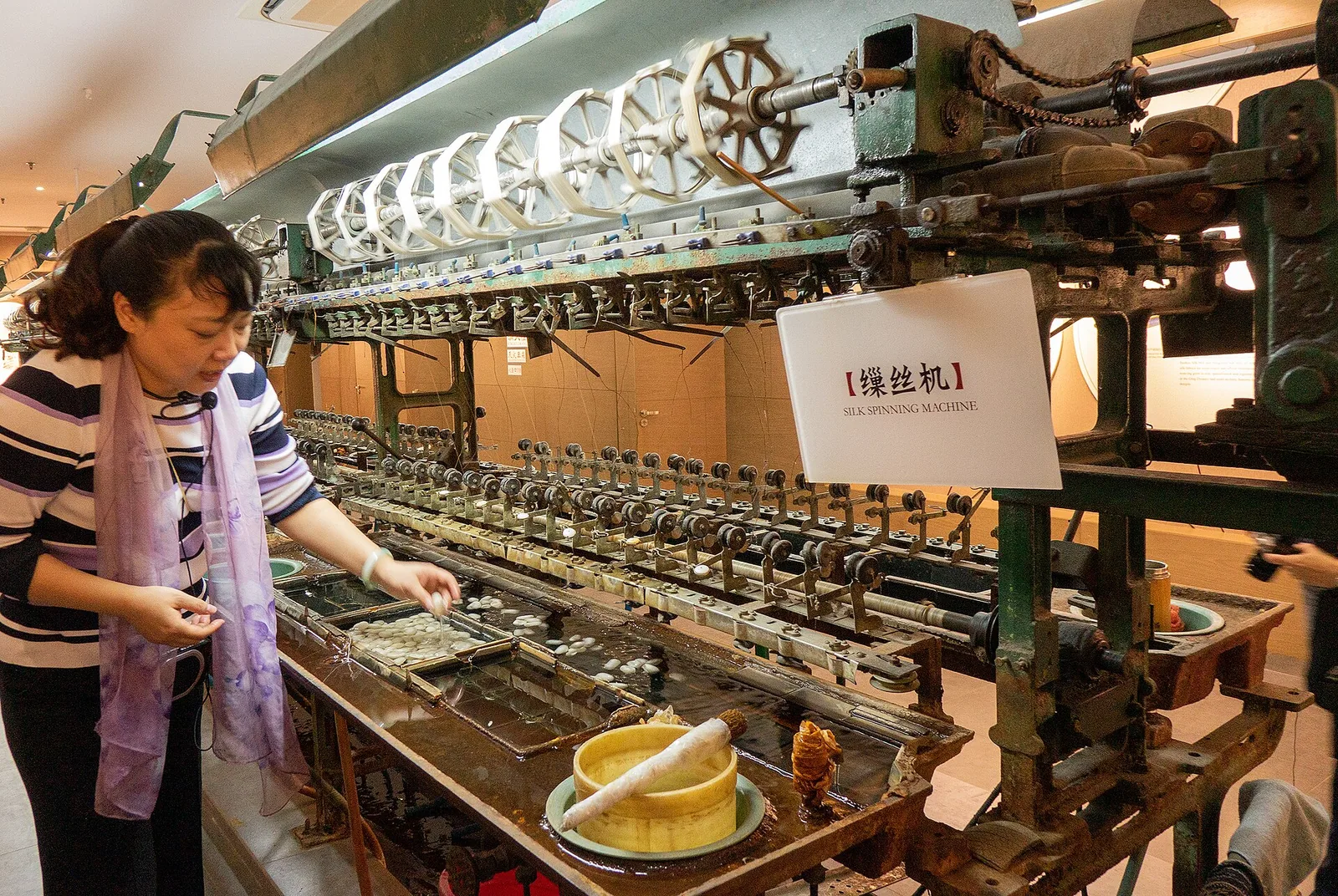
Suzhou’s silk shops range from excellent to predatory. The excellent ones sell real silk at fair prices and can explain the difference between crepe, satin and brocade. The predatory ones sell polyester with a story, a “factory tour” and a commission for your guide. The product looks similar under shop lights. The price and the hand of the fabric tell the truth.
The reliable options
The Suzhou Silk Museum shop is a safe starting point: real silk, clear labelling, no pressure. The Suzhou Embroidery Research Institute sells high-quality embroidered pieces and silk accessories. Established department stores and brand shops in the city centre are also reliable, though less atmospheric. For a working studio experience, look for small shops where someone is actually sewing or weaving.
Markets and tourist streets can be fine for cheap accessories, but do not pay silk prices for synthetic fabric. If you are unsure, buy a small item first and test it at home. A scarf or a handkerchief is a low-risk purchase.
How to test
Touch: real silk is cool, soft and slightly weighty. It warms quickly in your hand. Polyester is slicker, lighter and often static. Drape: real silk falls softly and has a subtle irregularity. Polyester is either stiff or unnaturally fluid. Shine: real silk has a deep, soft lustre; polyester glares.
Burn test: if the seller allows it, burn a loose thread. Real silk smells like burnt hair and leaves a soft, crushable ash. Polyester melts into a hard bead and smells chemical. Do this only on a sample or a loose thread, and never in a shop without permission.
| Item | Real silk range | Warning sign |
|---|---|---|
| Scarf | 100–500 CNY | Under 50 CNY “pure silk” |
| Tie | 150–600 CNY | Stiff, shiny, no label |
| Embroidered panel | 500–5,000+ CNY | Printed image, glass frame |
| Dress | 500–3,000 CNY | “Factory price” with a tour |
| Length of fabric | 100–400 CNY/m | No composition label |
The tourist traps
Be wary of “silk factory” tours, especially those offered by tour guides or drivers. The pattern is always the same: a demonstration, a hard sell, and a price that is well above market. Be wary of shops with a “special discount for foreigners” and a tout at the door. Be wary of any item that is shrink-wrapped, identical to the next, and described as handmade.
What to buy
A scarf, a tie, a small embroidered piece, a length of fabric, or a silk pouch. Avoid large “silk paintings” unless you know what you are looking at. Avoid anything that feels like a souvenir rather than an object you would actually use. One good piece is better than five forgettable ones.
If you are buying a gift, ask for a receipt and a composition label. If the shop cannot provide either, walk away. Suzhou has too much good silk to waste money on the bad kind.
Questions people ask
Is it safe to buy silk in Suzhou?
Yes, if you buy from a reputable shop or museum. Tourist streets and “factory tours” are riskier. Test the fabric and ask for a receipt.
How much should a silk scarf cost?
A real silk scarf starts around 100 CNY and rises with quality and brand. Anything under 50 CNY described as pure silk is likely polyester.
Can I bargain in Suzhou silk shops?
In fixed-price shops and museums, no. In markets and small tourist shops, limited bargaining is possible, but do not let a discount persuade you to buy fake silk.