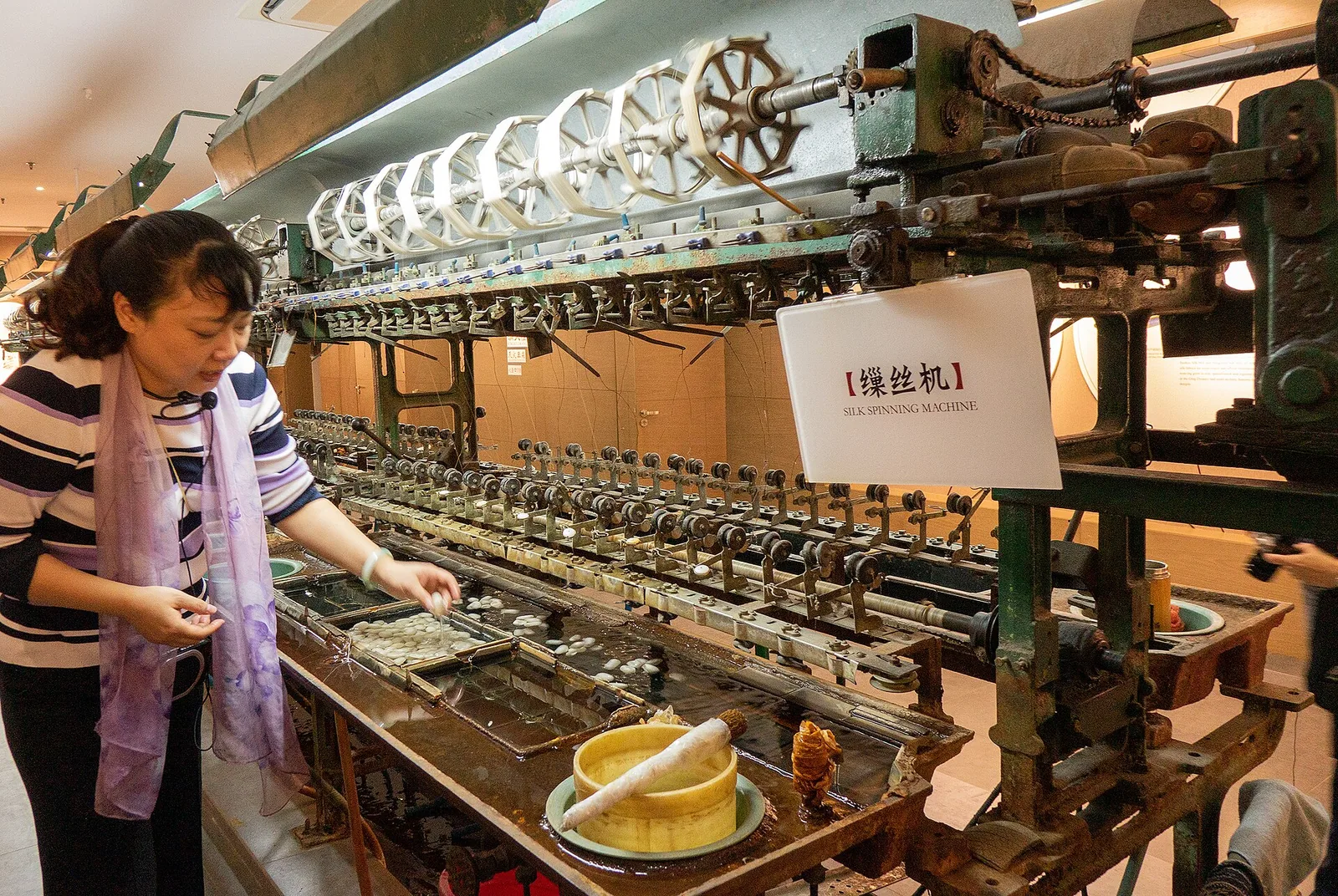
Suzhou has been a silk city for more than a thousand years. The fertile Yangtze delta produced mulberry leaves, the canals moved the cocoons, and the city’s workshops turned thread into cloth for emperors, officials and merchants. By the Ming and Qing dynasties, Suzhou silk was a luxury export and a source of enormous civic wealth. The gardens, the opera, the embroidery and the scholarship all rested on it.
The industry declined in the 20th century, but it did not disappear. Suzhou still produces silk, and the craft has been revived as heritage. The Silk Museum is the best place to understand the process: mulberry worms, reeling, weaving, dyeing and finishing. It is also a good place to learn how to tell real silk from the polyester sold on every tourist street.
How to judge real silk
Real silk feels cool and slightly heavy in the hand. It drapes softly, has a subtle irregularity, and does not crackle with static. When you rub it, it warms quickly. When you burn a thread, it smells like burnt hair and leaves a crushable ash; polyester melts into a hard bead and smells chemical.
The shine is a clue. Real silk has a soft, deep lustre, not a mirror glare. Cheap “silk” is often polyester satin: shiny, stiff and slippery. It may look impressive under shop lights and feel clammy in summer. Check the label, the price and the hand of the fabric.
| Test | Real silk | Polyester |
|---|---|---|
| Touch | Cool, soft, weighty | Smooth, slick, static |
| Drape | Fluid, slightly irregular | Stiff or overly fluid |
| Shine | Soft lustre | Bright glare |
| Burn | Burnt hair, soft ash | Melts, hard bead |
| Price | Higher | Suspiciously low |
Where to see and buy
The Suzhou Silk Museum is the essential stop: it explains the industry and displays historical textiles. The Suzhou Embroidery Research Institute is the place to see silk thread turned into art. For buying, reputable shops near the museum, the old town and larger hotels are safer than souvenir stalls. A small piece — a scarf, a pouch, a length of fabric — is a better buy than a cheap “silk” dressing gown.
The silk and the city
Silk shaped Suzhou’s architecture as well as its economy. The merchant houses, the guild halls, the gardens and the opera all depended on silk money. The city’s famous embroidery exists because silk thread was available and affordable. Even the cuisine reflects the wealth: delicate, sweet, texture-driven, designed for people who could afford refinement.
If you want to understand Suzhou, follow the silk. A morning at the museum, an afternoon in a studio, and a walk through the old town will tell you more than another garden.
Questions people ask
Is Suzhou silk real?
Suzhou still produces real silk, but tourist areas also sell polyester imitations. Buy from a reputable shop or museum, check the label, and use the touch and burn tests.
Where is the best place to buy silk in Suzhou?
The Suzhou Silk Museum shop and established silk stores are safer than souvenir stalls. The Embroidery Research Institute is best for art pieces. Avoid “factory” tours with high-pressure sales.
How do you wash real silk?
Hand wash in cool water with a mild detergent, do not wring, and dry in the shade. Some silk is dry-clean only. Check the care label before buying.