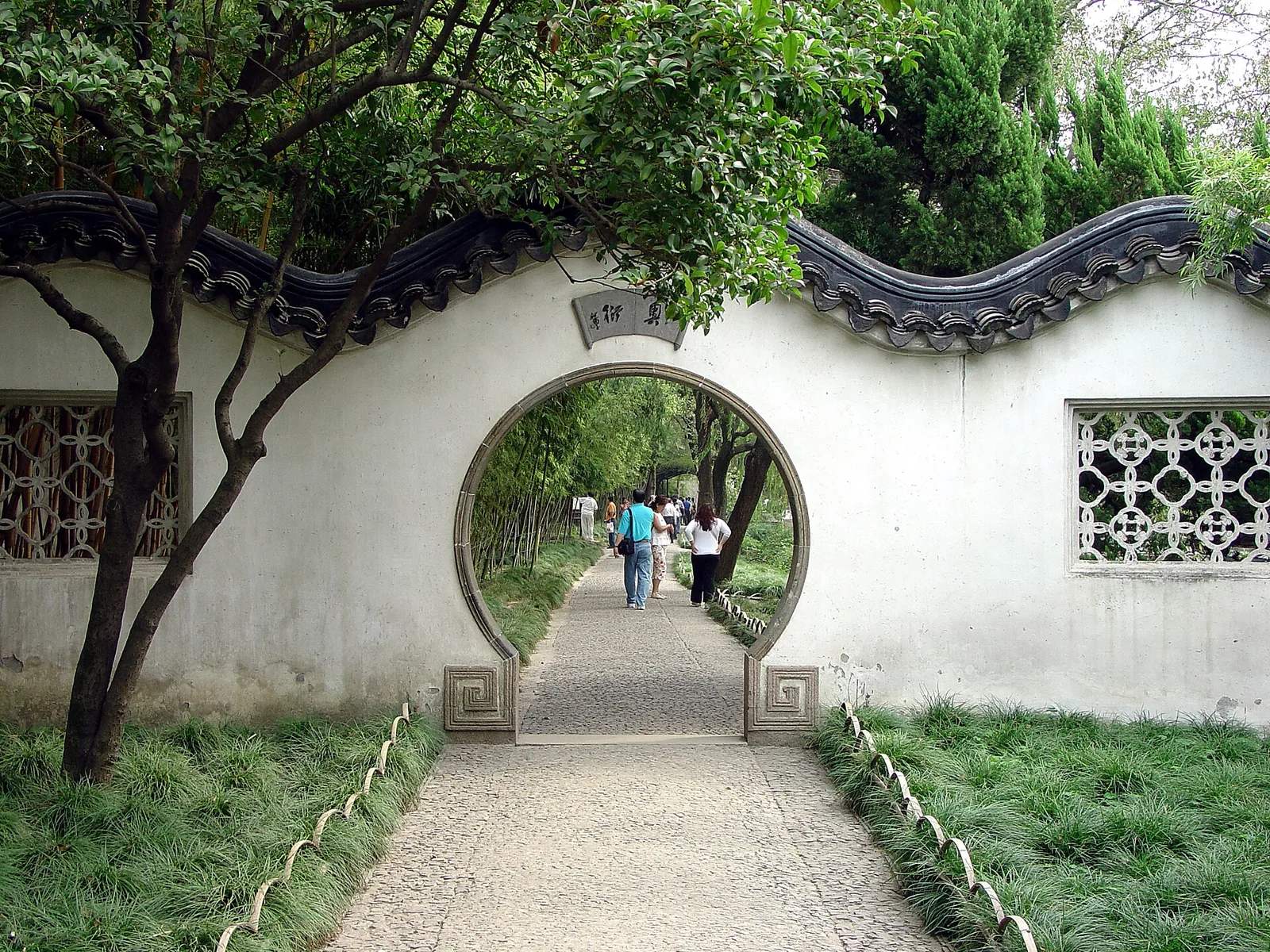
The first time you see a moon gate, it looks like a decorative doorway. A perfect circle in a white wall, edged with grey brick, opening onto a path or a courtyard. It is pretty. It is also a machine for changing your attention.
A garden is too much to see at once. A wall with a circle in it solves that problem. The circle crops the view. It excludes the rest of the garden and presents a single composed image: a branch, a rock, a pavilion, a patch of sky. You are not looking at a doorway. You are looking at a frame.
How it works
The moon gate does three things at once. It marks a threshold, so you know you are leaving one part of the garden and entering another. It frames a view, so the garden is presented as a picture before you enter it. And it slows you down, because you have to step through a narrow opening and your body registers the change.
The effect is theatrical. The garden behind the wall is staged. You see a glimpse, then you enter, and the view expands. The circle is a promise. The path beyond is the payment. This is why moon gates are often placed at the end of a corridor or at the entrance to a courtyard: they create a pause before a reveal.
Where to find them
Most classical gardens have at least one. The Couple’s Retreat has a beautiful example opening onto a courtyard. The Master of the Nets uses circular openings to frame the pond and the pavilions. The Humble Administrator’s has several, including one that frames a view of the pagoda. The Lingering Garden uses them in its corridors. Canglang and the Garden of Cultivation have quieter examples.
Do not hunt for a single famous gate. Notice the ones you pass. A moon gate is not a monument; it is a transition. The best one is the one you walk through without expecting it.
How to look
Before you walk through, stop. Look at what the circle contains. Is it a branch, a rock, a distant roof, a person? What is excluded? Then walk through slowly and look again. The view changes. The garden is not a set of objects; it is a sequence of frames. The moon gate is the clearest instruction in the garden: pay attention to this.
If you are photographing, resist the urge to center the circle and shoot straight on. The cliché is a circle with a garden inside. The better photograph is often the view from inside the circle, or the edge of the frame, or the shadow of the wall. The gate is a tool, not a subject.
Questions people ask
What is a moon gate?
A circular opening in a garden wall. It frames a view and marks a transition between parts of the garden.
Where can I see a moon gate in Suzhou?
Most classical gardens have one. The Couple’s Retreat, the Master of the Nets and the Humble Administrator’s are good places to start.
Why are moon gates circular?
The circle frames a view and creates a sense of completeness. It also slows you down as you pass through.