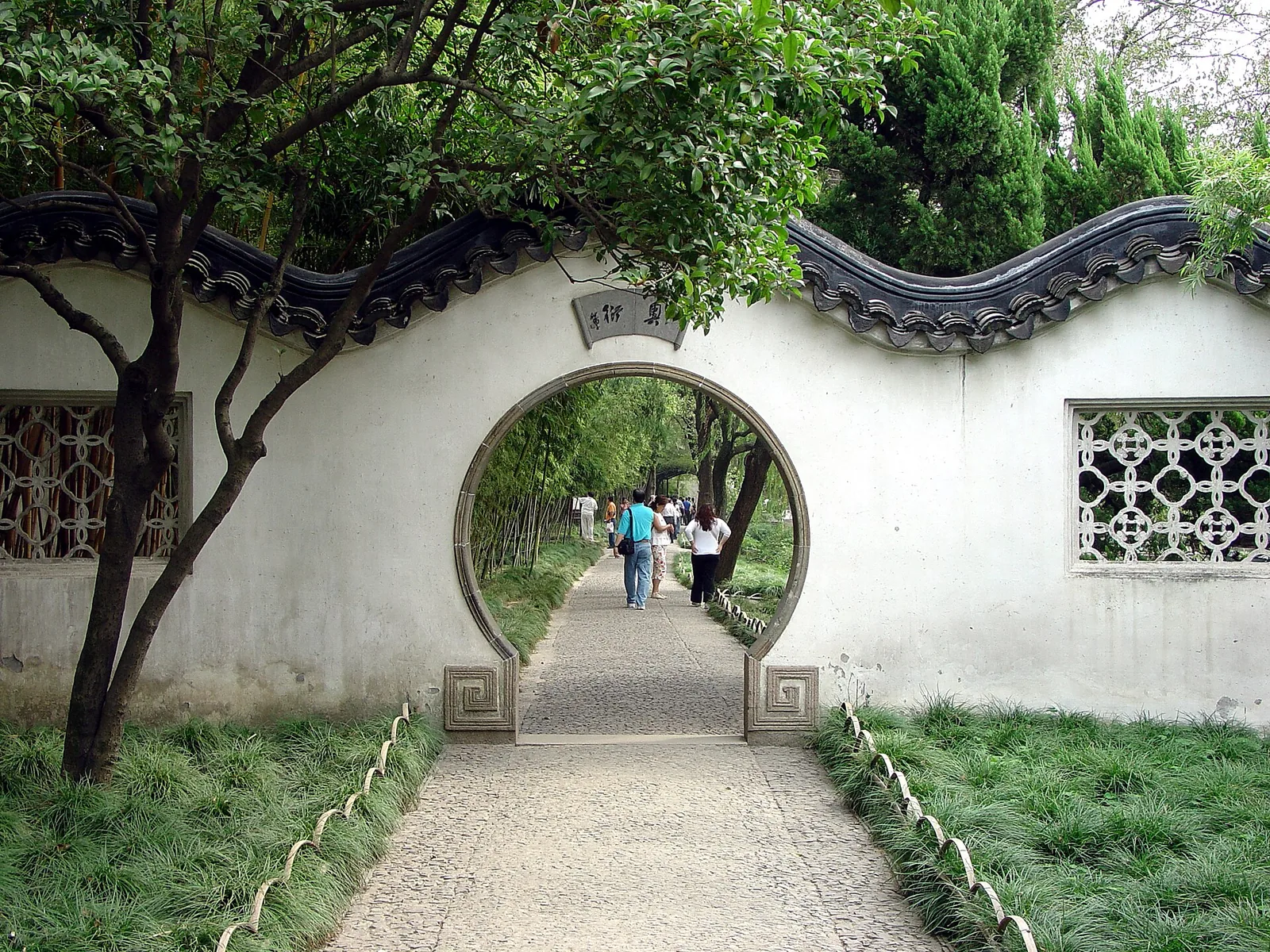
Everyone takes the same photograph of the same pavilion. That is fine; it is a good pavilion. But the garden has more interesting pictures in it: a window cutting a view in half, a corridor bending out of sight, a rock reflected in still water, a person standing exactly where the composition needs them. Those pictures require patience, not better equipment.
Choose two gardens, not five
A garden changes character over the course of a day. If you rush through five, you will get five sets of the same flat midday pictures. Choose two: one large garden at opening, one small garden in the afternoon. Stay long enough to see the light move. The Lingering Garden and the Couple’s Retreat make a good pair; so do the Humble Administrator’s and Canglang.
The frames
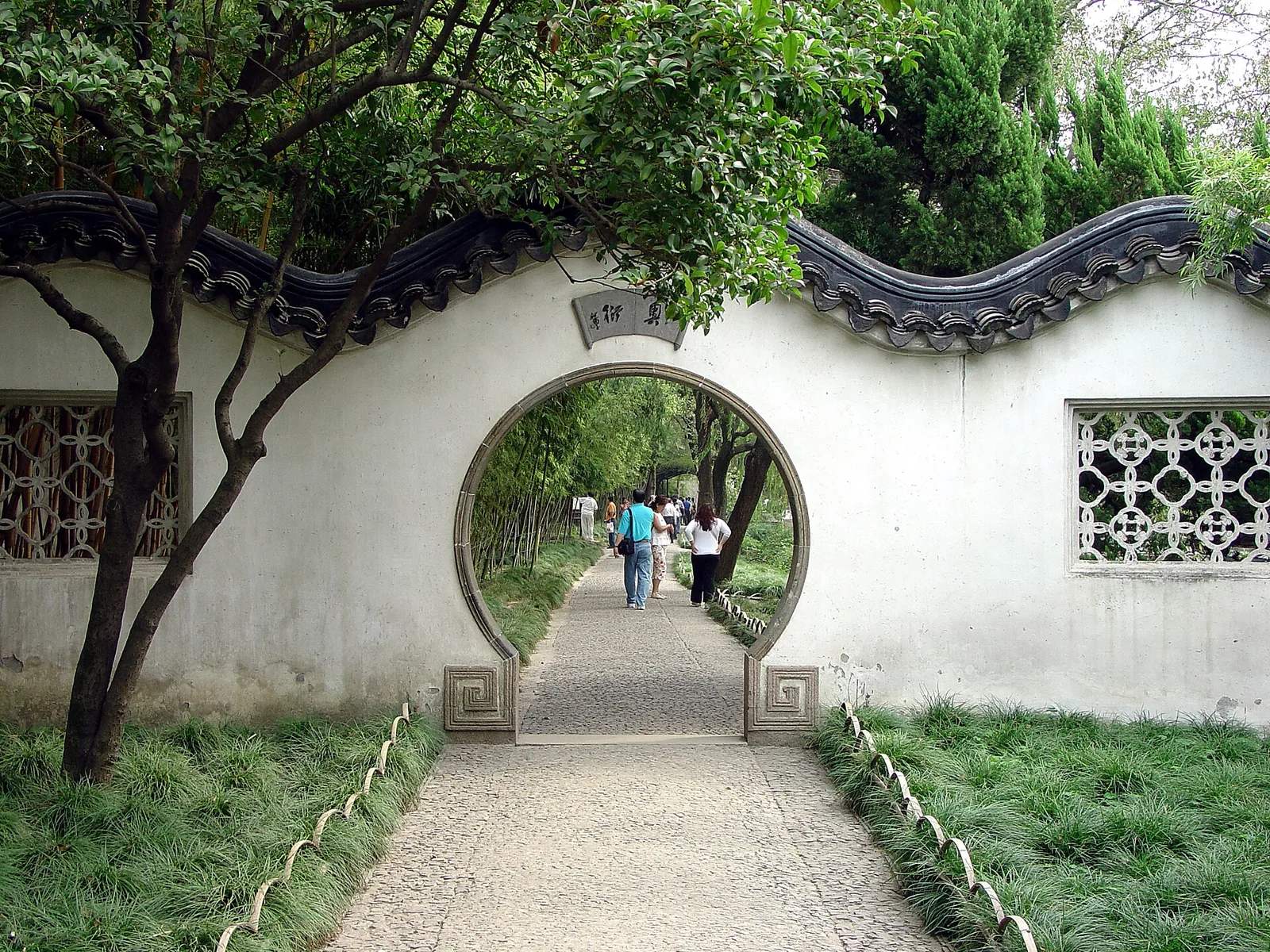
The garden is already a camera. Use its frames rather than trying to invent your own. Doorways, moon gates, lattice windows, the gap between two pillars, the space under a corridor roof. Put something in the foreground and let the garden recede. A photograph with a frame inside the frame reads as a garden even in thumbnail.
Look for reflections. The pond doubles the pavilion, the sky and the rockery. Shoot low and close to the water for a stronger reflection. In rain, the stone paths and the water surface become mirrors; this is the best weather for atmospheric pictures.
Light and weather
The first hour after opening has soft, directional light and empty paths. The last hour before closing has warmer light and fewer people. Midday is flat and crowded. Overcast days are excellent for detail and texture; light rain is better still. Snow is rare and transformative, but the garden may close or be slippery.
Do not be afraid of grey skies. The gardens were designed for Jiangnan weather, which is often soft and damp. A little mist or rain adds depth and separates the layers. A polarising filter can help with reflections, but it can also kill the reflection you want; use it selectively.
Gear and settings
A 35mm or 50mm equivalent lens is enough for most frames. A short telephoto (85–135mm) is useful for compressing layers and isolating details. A wide lens is less useful than you think; the gardens are intimate, and wide shots tend to include too much. Bring a cloth for rain and a spare battery; cold, damp days drain batteries faster.
For still water, a shutter speed of 1/125 or faster is fine; for a glassy surface, use a tripod and a longer exposure, but only if you are not blocking a path. For rain, protect the camera and expose for the highlights; the wet stone will do the rest.
Etiquette
Do not block a doorway or a corridor to get a shot. Do not set up a tripod in a narrow passage. Do not photograph people’s faces closely without asking, especially children. Do not climb on rockery or stand on walls for a better angle. The garden is a shared space, and the best photographs are made without making the place worse.
Questions people ask
Can I use a tripod in Suzhou gardens?
Usually yes, but not in narrow corridors or crowded areas. Some gardens may restrict tripods during peak times. Be considerate and keep paths clear.
What is the best lens for garden photography?
A 35mm or 50mm equivalent for most frames, plus a short telephoto for details and compression. A wide lens is less useful than expected in intimate gardens.
Is photography allowed in all gardens?
Personal photography is generally allowed. Commercial shoots, drones and large equipment may require permission. Check the garden’s rules before you arrive.