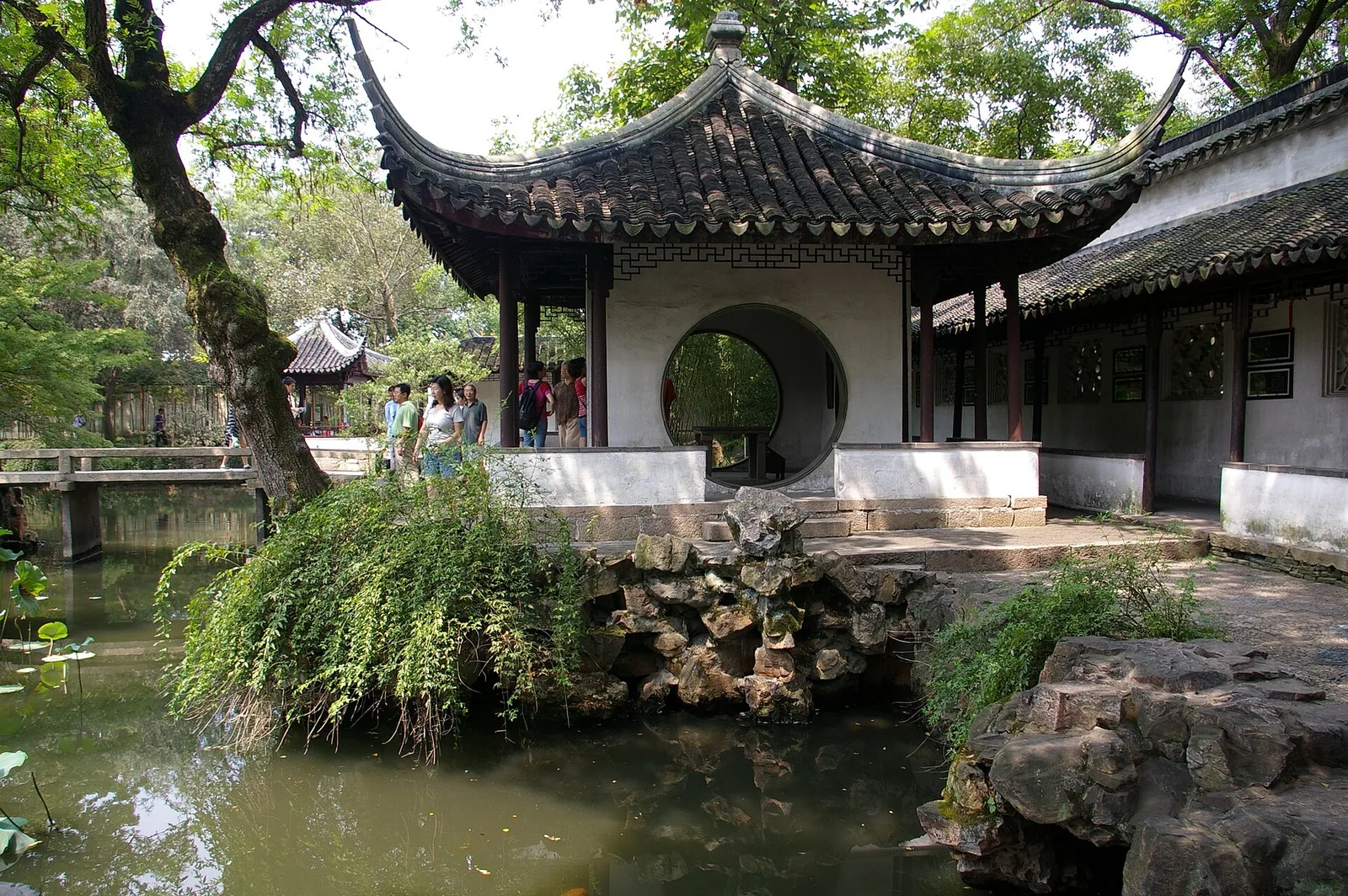
Suzhou is not a landscape photography city. There are no mountains or dramatic skylines. It is a city of composed views: a window framing a branch, a moon gate opening onto a path, a pavilion reflected in still water. The photographs come from patience and positioning, not from a single grand subject.
The light
The best light is early morning, from about 7:00 to 9:00, and late afternoon, from about 16:00 to sunset. The gardens open at 7:30, which is perfect. The light is soft, the crowds are thin, and the stone is cool. Midday light is harsh and the gardens are full. Do not shoot between 11:00 and 15:00 unless you want flat, contrasty images.
Overcast days are underrated. The soft light suits the gardens’ subtle colours and eliminates harsh shadows. Rain adds atmosphere: wet stone, reflections, umbrellas. Winter snow is rare but magical. Do not skip a garden because the sky is grey.
The gardens
The Humble Administrator’s is the classic: the central pond, the pavilions, the borrowed view of the pagoda. Go at opening and head straight to the main pond before the tour groups. The Lingering Garden is better for detail: corridors, rockery, framed windows. The Master of the Nets is intimate and good for quiet compositions. Canglang has a strong architectural frame. The Couple’s Retreat is small and peaceful.
Use the garden’s own framing. The windows, doorways, moon gates and corridors are designed to frame views. Stand back, use a longer lens, and let the architecture do the work. A wide-angle lens can distort the small spaces; a 35mm or 50mm equivalent is often better. A tripod is useful for interiors but may be restricted in some gardens.
The canals
The canals are best at dusk, when the lanterns come on and the water reflects the sky. Pingjiang Road is the classic, but it is crowded. Walk the quieter lanes, or go to Shantang for a livelier scene. The stone bridges are good vantage points. A polariser helps cut reflections and deepen the water’s colour.
For people photography, be respectful. Ask before photographing individuals, especially older residents. A smile and a gesture are usually enough. Do not photograph children without permission. The old town is a living neighbourhood, not a set.
Seasonal subjects
Spring: blossom, wisteria, peonies. Summer: lotus, green, rain. Autumn: osmanthus, golden ginkgo, red maple, crab. Winter: bare branches, snow, grey light. Each season changes the garden’s character. The best months for colour are April and November; the best for atmosphere are June (rain) and January (quiet).
Practical kit
Bring a fast prime (35mm or 50mm equivalent), a longer lens for details, a polariser, and a rain cover. A small tripod is useful but optional. Carry a cloth for wiping rain and spray. The gardens are dusty in dry weather; clean your lens. A power bank is essential if you shoot on a phone.
Finally, slow down. The best photographs in Suzhou are not of the famous sights; they are of a window, a reflection, a person, a quiet corner. Sit for ten minutes in one spot and watch. The city will show you the frame.
Questions people ask
What is the best time to photograph Suzhou gardens?
Early morning, around opening at 7:30, and late afternoon. Avoid midday, when the light is harsh and the crowds are thick.
Can I use a tripod in Suzhou gardens?
Some gardens restrict tripods at busy times. A small tripod or beanbag is less conspicuous. Check at the entrance.
Which garden is best for photography?
The Humble Administrator’s for classic views, the Lingering Garden for detail and corridors, and the Master of the Nets for intimate compositions.