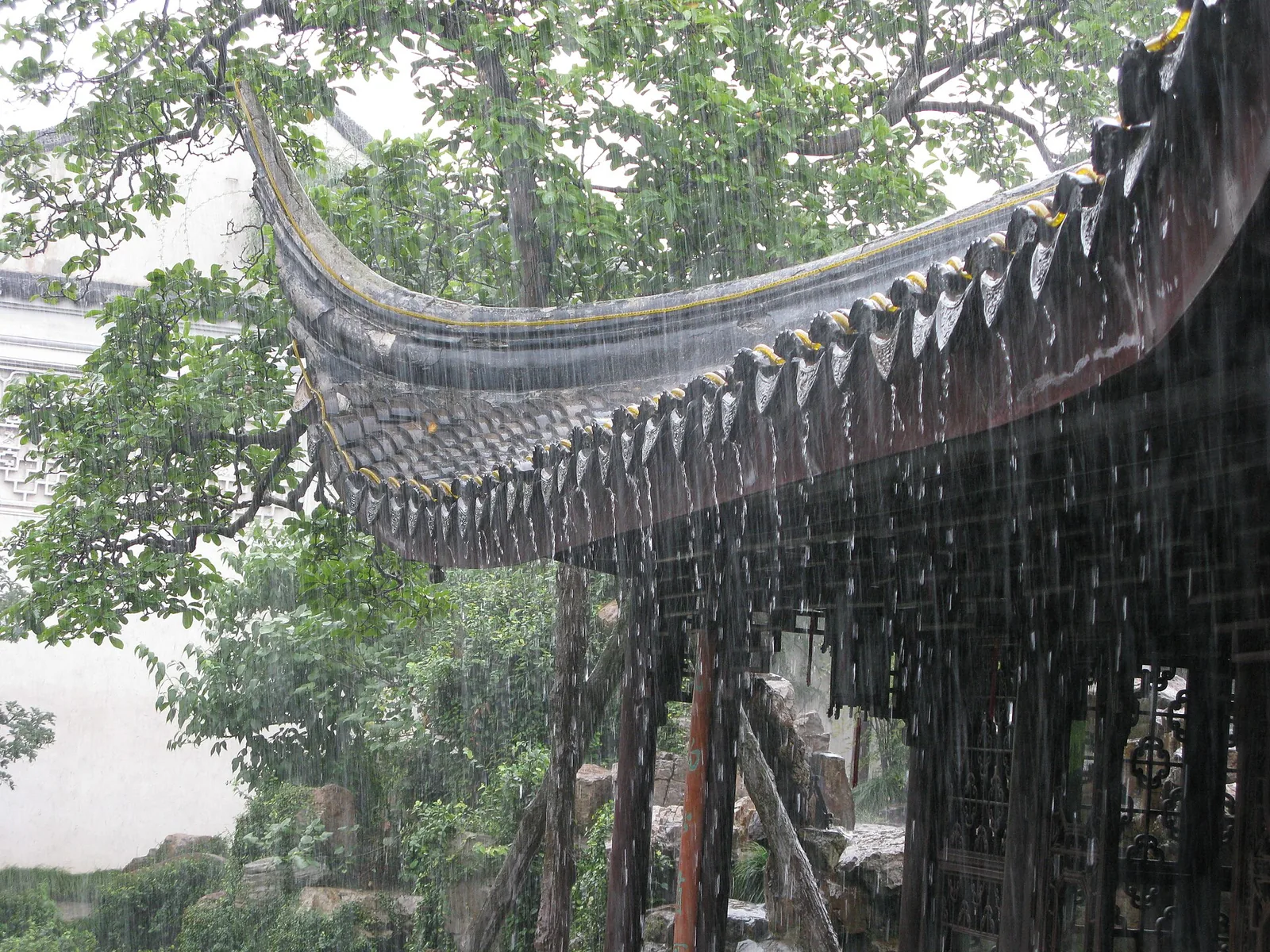
It rains a lot in Suzhou. The plum rain season can last for weeks, and even in the dry months a drizzle can arrive without warning. Visitors see this as bad luck. The garden sees it as weather. The corridors are covered, the roofs are pitched, the ponds are designed to receive rain. The garden was built for this.
A rainy garden is not a photograph of a sunny garden with an umbrella. It is a different experience. The colours deepen. The stone darkens. The leaves glisten. The sound changes: rain on tiles, rain on leaves, rain on water. The garden becomes a shelter, and you become aware of the architecture as a place to stand.
Where to go
Choose a garden with covered corridors: the Lingering Garden, the Couple’s Retreat, Canglang, the Garden of Cultivation. These gardens let you walk in the rain without getting soaked. The corridors are not just circulation; they are viewing platforms. You stand under the roof and look out at the wet garden. The frame is the roof edge, the columns, the lattice.
Avoid the Lion Grove in heavy rain. Its rockery is a maze of narrow steps and slippery stone. The Humble Administrator’s is beautiful in rain, but it is busy and has less covered circulation. The Master of the Nets is small and manageable, with several sheltered spots.
What to notice
Listen. The rain on the tiles is a different sound from the rain on the pond. The gutters and drainage channels are part of the design; watch where the water goes. The pond rises. The rockery darkens. The white walls become a backdrop for rain, which reads as texture.
Look at the reflections. A wet stone path reflects the sky. A pond in rain is dimpled and alive. The garden’s colours are saturated. This is the best weather for seeing the garden as a complete system: water, stone, plant, roof, sky.
Practicalities
Wear shoes with grip. The stone paths are slippery, especially the polished flagstones and the rockery steps. Bring a small umbrella and a rain jacket; umbrellas are awkward in narrow corridors. Protect your camera. Carry a cloth. Keep your ticket dry.
Plan a short indoor stop after the garden: a teahouse, the museum, a noodle shop. The contrast between wet and dry is part of the pleasure. Do not try to do three outdoor sights in one rainy day. One garden, one tea, one walk is enough.
The garden in rain is not a consolation prize. It is the garden doing what it was designed to do: sheltering you while showing you the weather. Stand under the corridor. Listen. Stay a little longer than you planned.
Questions people ask
Is it worth visiting a Suzhou garden in the rain?
Yes. The gardens were designed for rain, with covered corridors and ponds. They are quieter and more atmospheric when wet.
Which garden is best in rain?
The Lingering Garden, the Couple’s Retreat and Canglang have good covered corridors. Avoid the Lion Grove rockery, which is slippery.
What should I wear for a rainy garden visit?
A rain jacket, shoes with grip and a small umbrella. The stone paths are slippery, and umbrellas are awkward in narrow corridors.