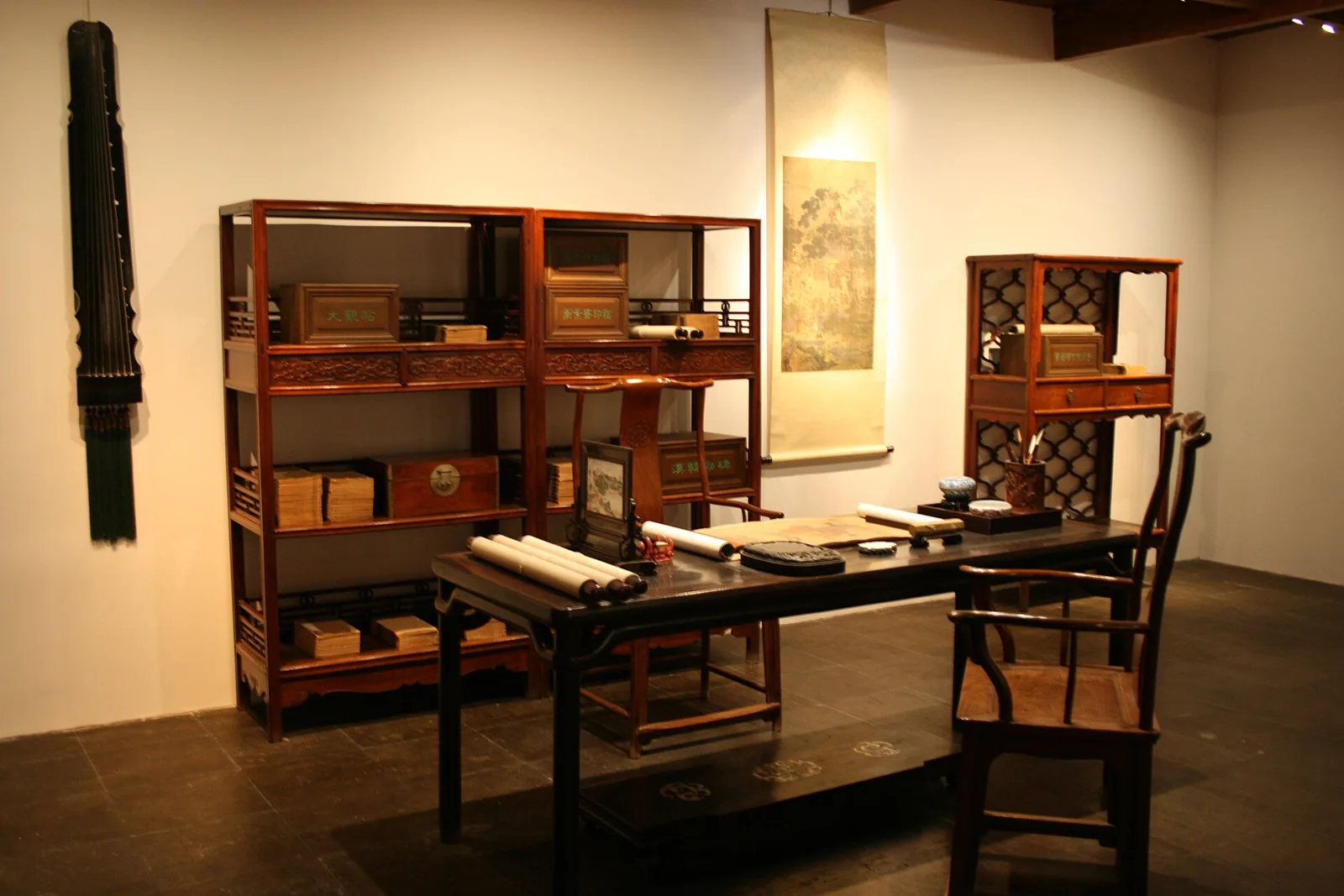
Ming-style furniture is one of China’s great design traditions: restrained, precise and remarkably modern-looking. The best pieces are made from hardwood, put together with mortise-and-tenon joints, and finished so that the grain of the wood is the main decoration. Suzhou-style furniture, known as Su Zuo, is the reference lineage.
The term “Ming furniture” is a style label, not a guarantee of date. It refers to the elegant hardwood furniture associated with the Ming dynasty, but the style continued into the Qing and is still made today. A “Ming-style” chair may be four hundred years old or four months old. The difference matters, especially when you are buying.
What makes it Ming
The defining qualities are line, proportion and joinery. Ming furniture is not heavily carved. The beauty comes from the silhouette, the grain of the wood and the precision of the joints. A yokeback armchair has a curved back rail that supports the sitter; a painting table has a clean apron and legs that taper subtly. The forms look simple because the proportions are exact.
The furniture was designed for the scholar’s studio and the garden pavilion: tables for painting, chairs for reading, cabinets for books, stands for incense and stones. It was not designed for a museum. It was designed to be used, and its durability is part of its beauty.
The Suzhou style
Suzhou was a centre of fine furniture-making in the Ming and Qing. The Su Zuo style is known for its refined proportions, its preference for hardwood, and its restraint in carving. It is associated with the same literati culture that produced the gardens and the Wu School paintings: furniture was part of a composed interior, not a separate category of luxury.
The Suzhou Crafts Gallery at the Suzhou Museum West displays Su-style furniture alongside jade, embroidery, fans and prints. It is the best place to see how the furniture fits into the broader material culture. The museum also runs programmes with inheritors of the craft, which can be a good way to learn about the process.
The joinery
Ming furniture is held together by joinery, not screws or nails. Mortise-and-tenon joints are cut so that the parts lock together; dovetails are used for drawers and carcasses; floating panels allow solid wood to move with humidity without splitting. A well-made joint is invisible from the outside and strong enough to last for centuries.
When you inspect a piece, look at the underside, the back and the inside of drawers. The quality of the hidden surfaces tells you more than the polished top. Are the joints tight? Are the drawer bottoms solid wood or plywood? Are there screws, staples or metal brackets? A genuine Ming-style piece should not need them.
The finish is also a clue. Traditional furniture is finished with wax or lacquer, not a thick plastic coating. The surface should feel smooth but alive, with visible grain and a soft sheen. A dead, glassy finish may be hiding poor wood or a repair.
Woods and patina
The most prized woods are huanghuali (yellow rosewood), zitan (purple sandalwood) and jichimu (chicken-wing wood). Huanghuali has a warm, honey-brown colour and a lively grain; zitan is dense, dark and almost black; jichimu has a dramatic feathery figure. These woods are now scarce and regulated, which affects both price and legality.
Patina is the surface that develops with age, use and polishing. It is not dirt, and it should not be stripped. A genuine patina is deep and uneven, following the wear patterns of the object. A fake patina is often uniform, sticky or artificially darkened. If a piece looks too perfect, ask why.
Where to see it
The Suzhou Museum West’s Suzhou Crafts Gallery is the essential stop. It displays Su-style furniture in the context of the city’s other crafts, and the museum’s architecture provides a useful contrast: a modern building designed with traditional proportions and materials.
Some classical gardens contain period furniture, though it is often roped off or behind glass. The Shanghai Museum has one of the best public collections of Ming furniture in the region and is an easy day trip from Suzhou. Auction houses and specialist dealers occasionally hold exhibitions; they are useful for seeing condition and prices, even if you do not bid.
Buying and care
There are two markets: new Su-style furniture made by workshops, and antique furniture with provenance. New furniture can be excellent, and it is the practical choice for most buyers. Ask about the wood, the joinery, the finish and the workshop’s training. A good maker will welcome questions; a bad one will talk about “face” and “investment”.
Antique furniture requires expert advice. Condition, replacements, provenance and legal export all affect value. Do not rely on a dealer’s story. If you are spending serious money, hire an independent specialist. If you are buying a small object as a souvenir, buy it because you like it, not because you think it will appreciate.
Keep furniture away from direct sun, radiators and damp walls. Aim for stable humidity, around 50–60 per cent. Dust with a soft cloth and wax sparingly with a natural furniture wax. Do not strip the patina, and do not use silicone polish. A well-cared-for piece will outlast its owner.
Questions people ask
What is Ming-style furniture?
Ming-style furniture is a refined hardwood furniture tradition associated with the Ming dynasty, characterised by graceful proportions, restrained carving and mortise-and-tenon joinery. The style continued into the Qing and is still made today.
Is Suzhou the home of Ming furniture?
Suzhou-style furniture, or Su Zuo, is one of the reference lineages of Ming furniture. The city and its surrounding region were major centres of fine furniture-making, and the style is closely linked to Suzhou’s literati culture.
Can I export antique Chinese furniture?
Chinese cultural-relic export rules and CITES restrictions on protected woods may apply. Do not buy an antique for export without written advice on provenance and permits. Consult a specialist before committing.
Where can I see Ming furniture in Suzhou?
The Suzhou Museum West’s Suzhou Crafts Gallery is the best starting point. Some classical gardens also contain period furniture, and the Shanghai Museum has a major collection.