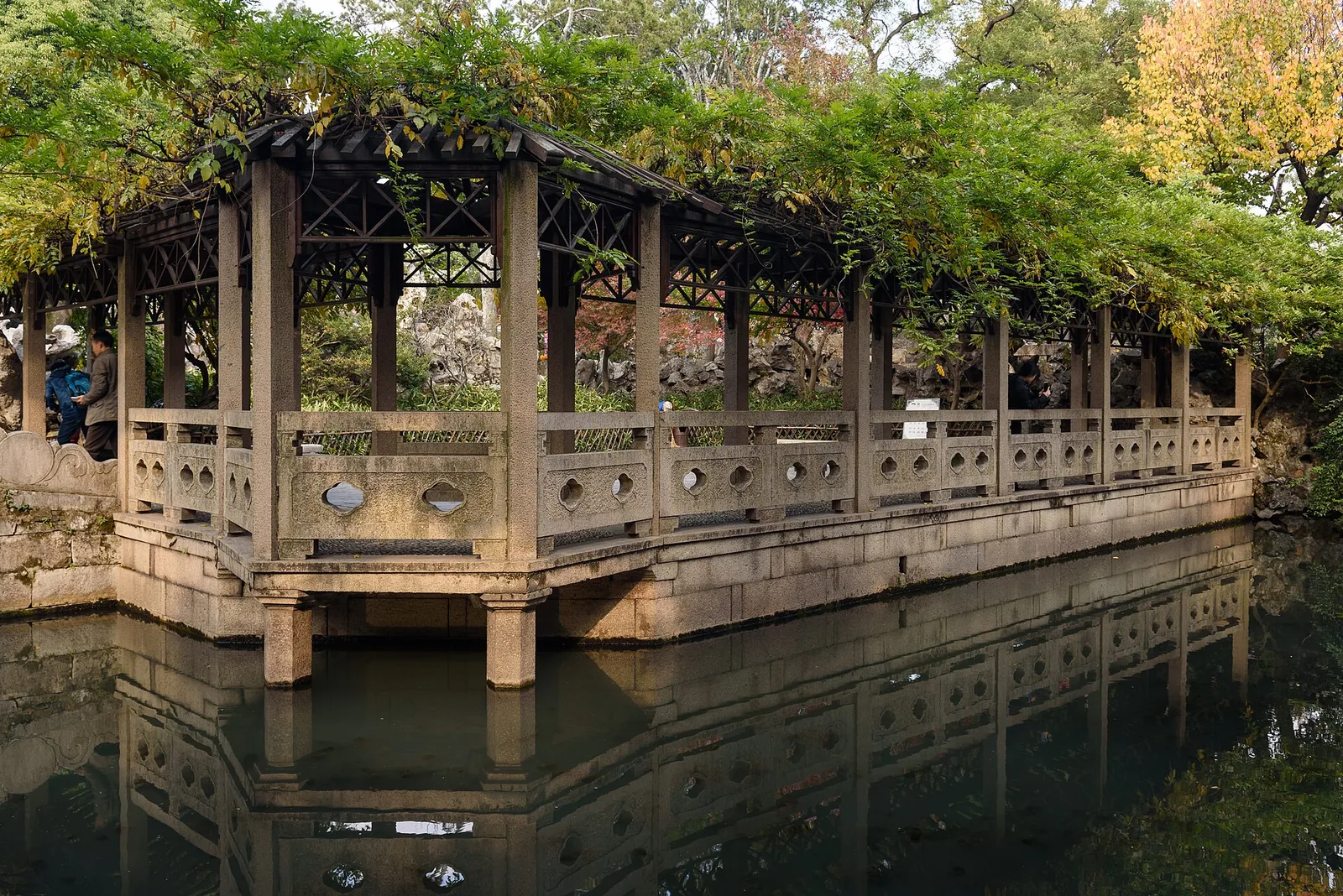
The classical gardens are usually described as the work of scholars. They were built by craftsmen from the Xiangshan villages west of Suzhou, whose timber-frame tradition is recognised by UNESCO. This experience is about the part of the garden that most visitors never look at: the structure.
The Xiangshan school is not a single workshop or family firm. It is a regional tradition of training and practice, passed from master to apprentice, with a shared toolkit of techniques and a shared aesthetic. Its most famous member was Kuai Xiang, the Ming carpenter credited with building the Forbidden City.
What actually happens
We begin in a garden — usually the Lingering Garden or the Humble Administrator’s — and look at the building rather than the view. Roof brackets, lattice windows, paving patterns, the way a corridor turns. I will show you the joints and proportions that mark Xiangshan work, and explain why the tradition is regional rather than generic.
Then we drive to a working workshop in the Xiangshan tradition. The carpenter shows you the tools, the timber and the mortise-and-tenon joint. You will handle the pieces, try a simple cut under supervision, and see how a frame is assembled without nails. The workshop is a working environment, not a demonstration room; we keep out of the way and follow the safety rules.
Lunch is local and simple. In the afternoon, depending on the day, we visit a restoration project, a craft gallery, or a second garden to compare what we have seen. The half day ends with tea and a short reading list.
Why it matters
A garden is a collaboration between a scholar’s programme and a craftsman’s knowledge. Once you see the joinery, the garden stops being a painting and becomes a building: a roof that sheds rain, a frame that moves, a window that frames a view. That is the pleasure of this day.
The tradition is also a useful corrective to the word “craft”. These are not decorative gestures added to a building. The joinery is the building. The ornament is concentrated where it matters: a carved bracket, a lattice window, a door panel, a ridge.
Who it is for
It suits architects, designers, woodworkers and anyone who likes to understand how things are made. It suits travellers who have already seen two or three gardens and want to look deeper. It does not suit anyone who wants a purely decorative experience or cannot stand the smell of sawdust.
What is included
- Garden entry and a guided reading of the building details.
- Workshop time with a Xiangshan carpenter.
- All materials for the practice joint.
- English interpretation and lunch.
- Local transport between the garden and the workshop.
Not included: hotel, transport to Suzhou, personal purchases, and any tools or furniture you commission.
A note on price
The experience is quoted per group. The workshop time and the local transport are the main costs. I confirm the quote and the meeting point in writing before you commit.
How to arrange it
Tell me your dates and group size. I will check the workshop calendar and reply with a shape and a quote. Weekdays are easier than weekends; two weeks’ notice is usual.
Questions people ask
Is this suitable for children?
Older children who are interested in making things usually enjoy it. The workshop has sharp tools, so young children need close supervision.
Do I need woodworking experience?
No. The session is an introduction, not a course. The carpenter adjusts the level to the group.
Can I commission a piece?
You can ask. I do not take a commission, and I will help you discuss materials, joinery, price and shipping directly with the workshop.
Is the workshop accessible?
Workshops vary. Tell me about mobility needs and I will check before confirming.