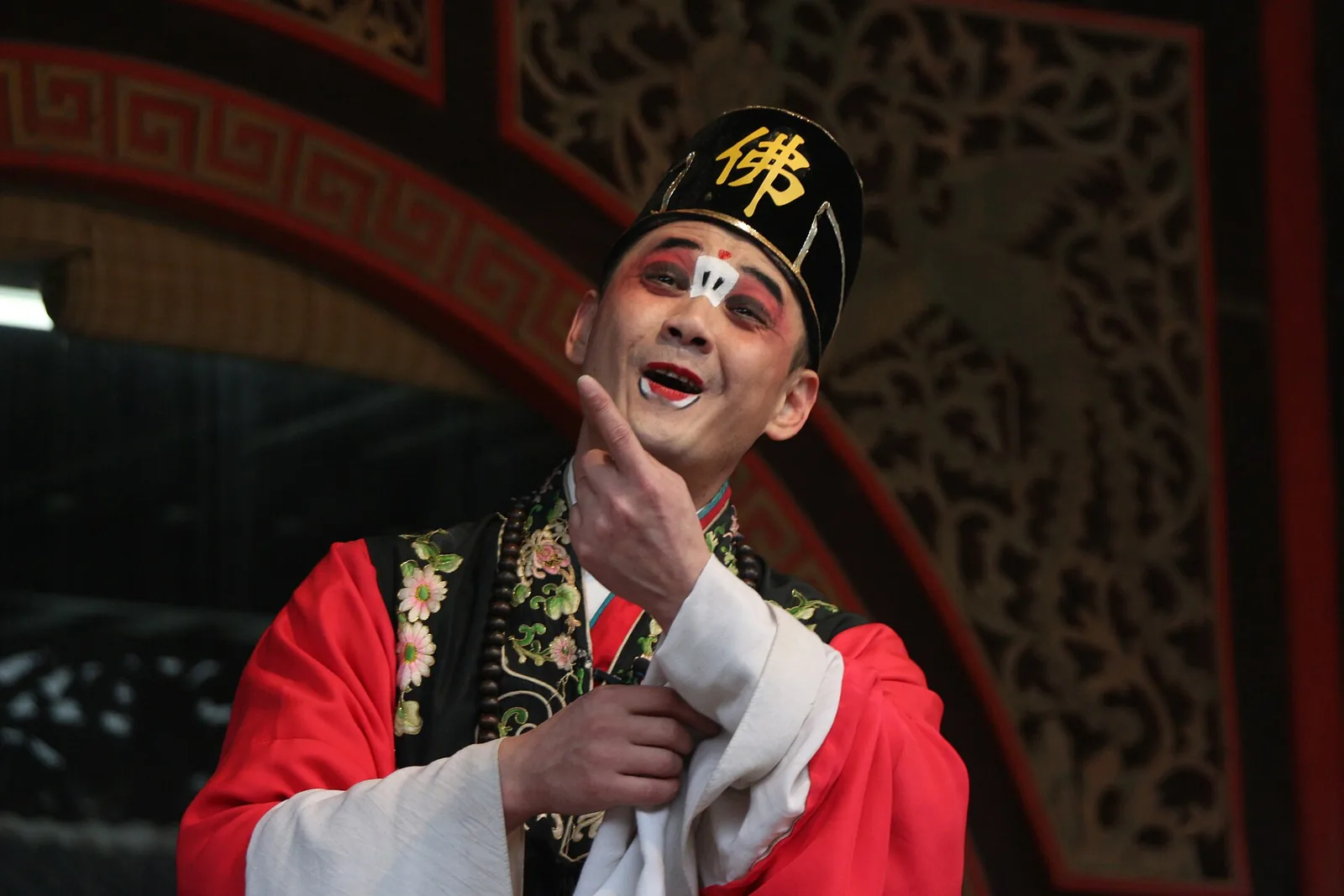
Kunqu is the oldest surviving form of Chinese opera, and the most literary. It is not a loud acrobatic spectacle. It is chamber theatre: a flute, a small ensemble, a single performer, and a gesture that can carry a whole scene. Without context, it can feel remote. With context, it is extraordinary.
It originated near Kunshan in the 14th century and matured in the Ming dynasty, when Suzhou’s wealthy literati patronised it. It influenced Peking opera and other regional forms. In the 20th century it nearly died out; today it survives through a small number of professional companies, academies and heritage programmes.
What the evening includes
We meet an hour before the performance for a short introduction: the history, the music, the role types, and the story we are about to see. I will show you what to watch in the hands, the sleeves and the voice. You will have a one-page plot summary and a few useful terms, not a lecture.
Then we take good seats — close enough to see the face and hands, far enough to see the whole stage. The performance is usually a short excerpt or a full evening, depending on what is on. During the interval, we talk about what we have seen. After the show, if the performer’s schedule allows, we meet briefly; this is never guaranteed, and I will tell you in advance if it is not possible.
The evening ends with a quiet drink or a walk back through the old town, depending on the hour and the weather. There is no shopping stop and no staged photo opportunity.
Why not the garden show
The Master of the Nets evening show is a beautiful introduction to the garden at night, but it is a tasting menu: short scenes, crowds, and a format designed for tourists. It is not the real thing. This experience is built around a proper performance, with the context that makes it legible.
If a full opera is not available on your dates, we choose the best excerpt programme in the city. If nothing good is on, I will say so and suggest pingtan or guqin instead. I would rather change the plan than sell you a weak performance.
Who it is for
It suits travellers who are patient, curious and willing to spend an evening with an unfamiliar art form. It suits anyone who has seen Peking opera and wants to understand the older, quieter tradition behind it. It does not suit anyone who wants a variety show, a costume photo shoot, or a performance in English.
What is included
- A pre-performance introduction and a one-page plot and listening guide.
- Good seats for the performance.
- English interpretation before and after the show.
- A short conversation with a performer where schedules allow.
- A quiet drink after the performance.
Not included: dinner, transport, and any programme or merchandise you choose to buy.
A note on price
The quote depends on the performance, the seats and whether a performer conversation is possible. It is priced per group, not per person. I confirm the programme and the seats before you commit.
How to arrange it
Send your dates and group size. I will check the performance schedule and reply with the programme, the seats and a quote. Kunqu is not performed every night, and the best programmes sell out; two to four weeks’ notice is usual.
Questions people ask
Do I need to understand Chinese?
No, but the plot briefing matters. The visual language carries much of the story. Titles and summaries vary by venue.
Will I meet a performer?
Sometimes. It depends on the schedule and the venue. I will tell you honestly before you book whether it is possible.
Is Kunqu suitable for children?
Older teenagers with an interest in theatre may enjoy it. Younger children usually find it too slow.
What if there is no good performance?
I will tell you and suggest an alternative — pingtan, guqin, or a different evening. I do not fill the slot with a tourist show.