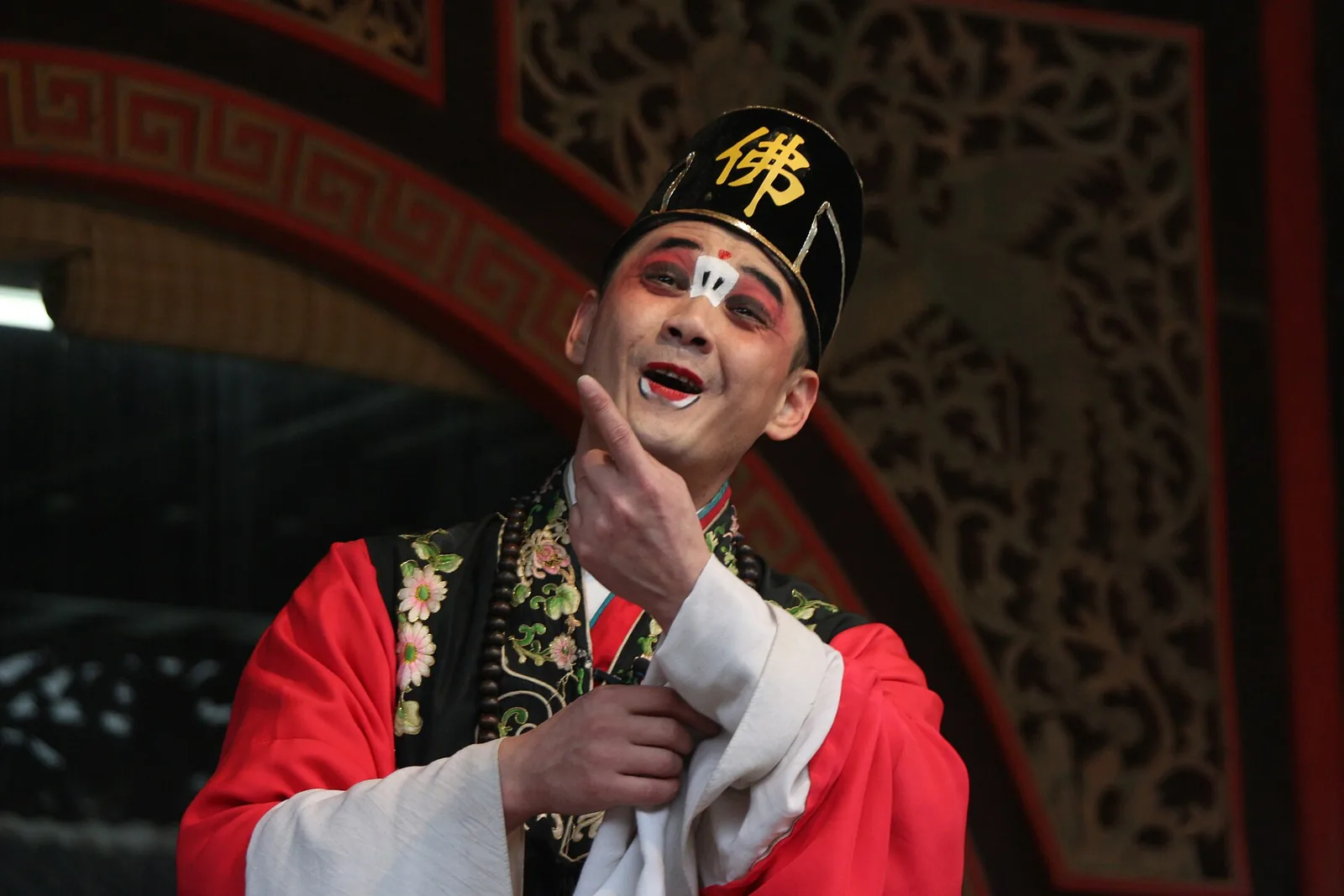
Kunqu is not Chinese opera in the sense of a loud, acrobatic spectacle. It is a literary theatre: slow, stylised, sung in a literary language, accompanied by a bamboo flute and a small ensemble. The plots are often familiar love stories or historical episodes, but the pleasure is in the poetry, the voice, the gesture and the costume. It is closer to chamber opera than to Broadway.
It originated in the Kunshan area near Suzhou in the 14th century and matured in the Ming dynasty, when Suzhou’s wealthy literati patronised it. It influenced Peking opera and other regional forms. In the 20th century it nearly died out; today it survives through a small number of professional companies, academies and heritage programmes.
What you will see
A full Kunqu opera can last two to three hours, with long arias and subtle movement. The stage is minimal: a table, two chairs, a backdrop. The performer’s gestures are codified: a sleeve movement can indicate an emotion, a step can indicate a journey. The music is soft, and the singing is high and ornamented.
For a first experience, choose a short excerpt — a “fold” from a longer play. These are 20–40 minutes and focus on one scene, usually a meeting, a parting or a famous aria. The Suzhou Kunqu Opera Theatre and the Master of the Nets evening show both offer accessible introductions. The garden performance is more atmosphere than opera; the theatre is the real thing.
Kunqu does not ask you to understand every word. It asks you to watch a hand move as if the whole story depended on it.
A note from the editor
How to prepare
Read a one-paragraph plot summary before you go. Learn the names of the main characters. Sit close enough to see the face and hands, but not so close that you cannot see the whole stage. Turn off your phone. Allow yourself to be bored for the first ten minutes; Kunqu rewards patience.
Do not expect subtitles in English at every venue. Some theatres provide a synopsis or a small screen; others do not. A translation app and a printed summary are useful. If you have no Chinese, focus on the visual language: costume colour, gesture, pace, music.
Where to see it
The Suzhou Kunqu Opera Theatre is the main professional venue. The Chinese Kunqu Opera Museum in Suzhou has exhibits and occasional performances. The Master of the Nets garden runs an evening show in season. Check schedules locally; performances are not daily, and the best ones sell out.
Kunqu is not for everyone. If you dislike slow music, formal gesture or unfamiliar languages, it may be a long evening. But if you give it an hour, it can change how you think about performance. It is one of the few art forms that genuinely deserves the word “refined”.
Questions people ask
Is Kunqu opera boring for beginners?
It can be, if you start with a full-length opera and no context. Start with a short excerpt, read the plot first, and sit close enough to see the gestures. It is slow by design.
Where can I see Kunqu in Suzhou?
The Suzhou Kunqu Opera Theatre is the main venue. The Chinese Kunqu Opera Museum and the Master of the Nets garden also host performances. Check schedules in advance.
Do I need to understand Chinese to enjoy Kunqu?
No, but a plot summary helps. The visual language of gesture, costume and music carries much of the meaning. Subtitles are not always available.