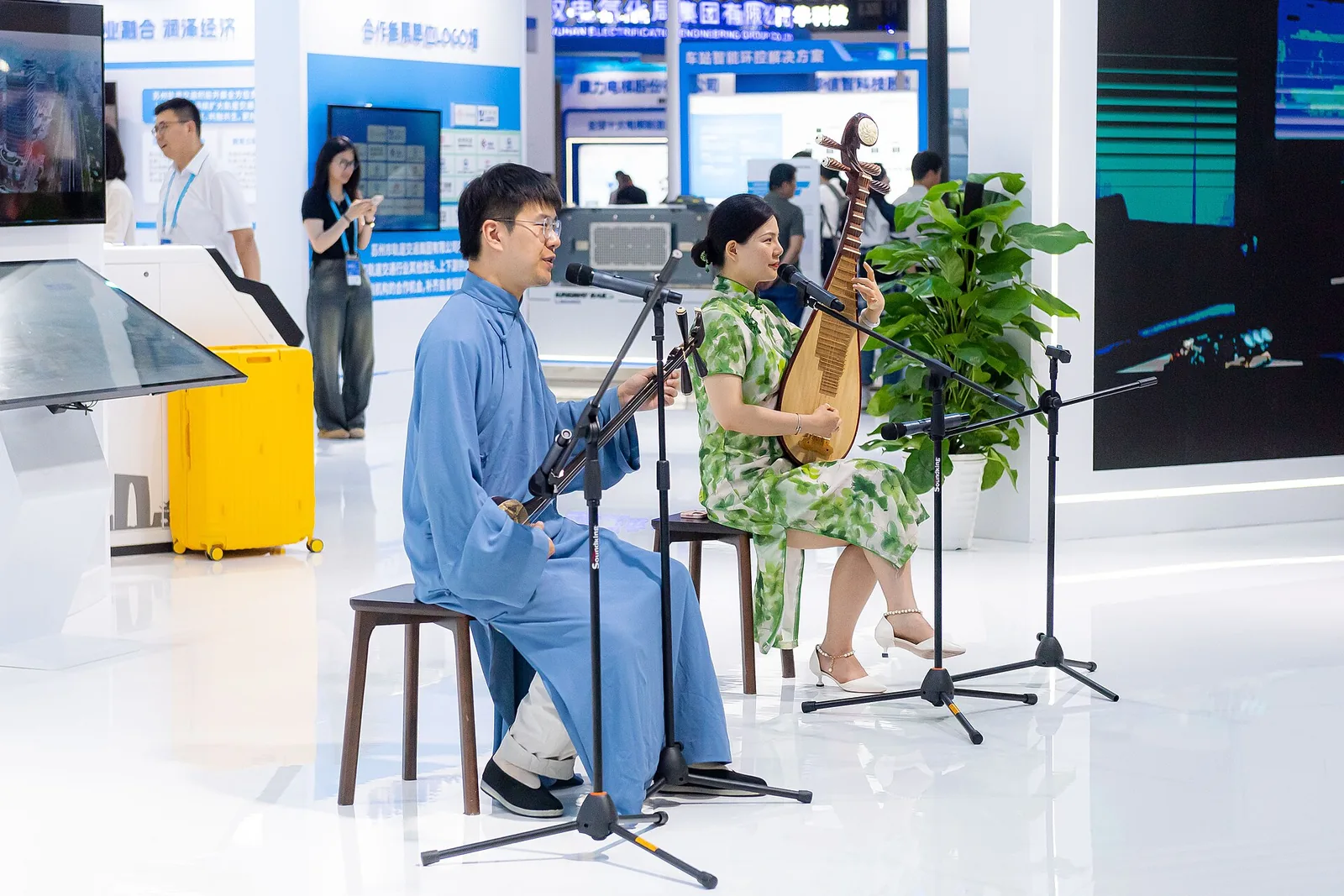
Pingtan is Suzhou’s local storytelling tradition: a performer or duo tells a long, serialised story in the Suzhou dialect, accompanied by a pipa or sanxian lute and a small drum. It is performed in teahouses, not grand theatres. The audience drinks tea, eats snacks, chats quietly and listens. It is informal, communal and very local.
The form has two branches: Pinghua, which is spoken storytelling, and Tanci, which is sung and accompanied. In practice, a performance may combine both. The stories are often historical romances, detective tales or domestic dramas, told over many sessions. Regulars follow a series the way others follow a television show.
What to expect
You will walk into a room that smells of tea and old wood. There will be a small stage or a raised platform, a table, two chairs, and a performer with an instrument. The audience will be mostly older locals. Tea is served in covered cups, and you can order snacks. The performance may run for an hour or more, with breaks.
You will not understand the dialect. That is fine. The pleasure is in the rhythm, the voice, the laughter of the audience, and the atmosphere of a room that has been doing this for a long time. If you stay for an hour, you will start to follow the emotional shape even without the words.
Where to see it
The classic venue is a teahouse in the old town, often near Pingjiang Road or the Confucian Temple area. Some teahouses run daily afternoon sessions; others have evening performances. The Chinese Pingtan Museum in Suzhou is a good place to learn the history and sometimes hosts performances. Ask your hotel for a current recommendation; venues change.
Pingtan is also performed at the Master of the Nets evening show, but that is a short excerpt for tourists. For the real thing, go to a teahouse. The atmosphere is the point.
Why it is the easiest local evening
Kunqu demands attention and preparation. Pingtan asks only that you sit down and drink tea. It is a social form, not a sacred one. You can arrive late, leave early, order more snacks, and no one will mind. It is the best way to spend a rainy afternoon or a slow evening in Suzhou.
If you are travelling with someone who is sceptical about “traditional culture”, take them to Pingtan. It is funny, human and unpretentious. It may be the thing they remember most.
Questions people ask
What is the difference between Pingtan and Kunqu?
Pingtan is teahouse storytelling with music, performed in dialect and often serialised. Kunqu is a formal literary opera with sung arias, stylised gesture and a full stage production. Pingtan is much easier for a first-time visitor.
Do I need to understand Chinese to enjoy Pingtan?
No. The atmosphere, voice and audience reaction carry the experience. A basic plot summary helps but is not essential.
How much does Pingtan cost?
Usually the price of tea plus a small ticket, often 30–80 CNY total. It is one of the cheapest cultural experiences in Suzhou.