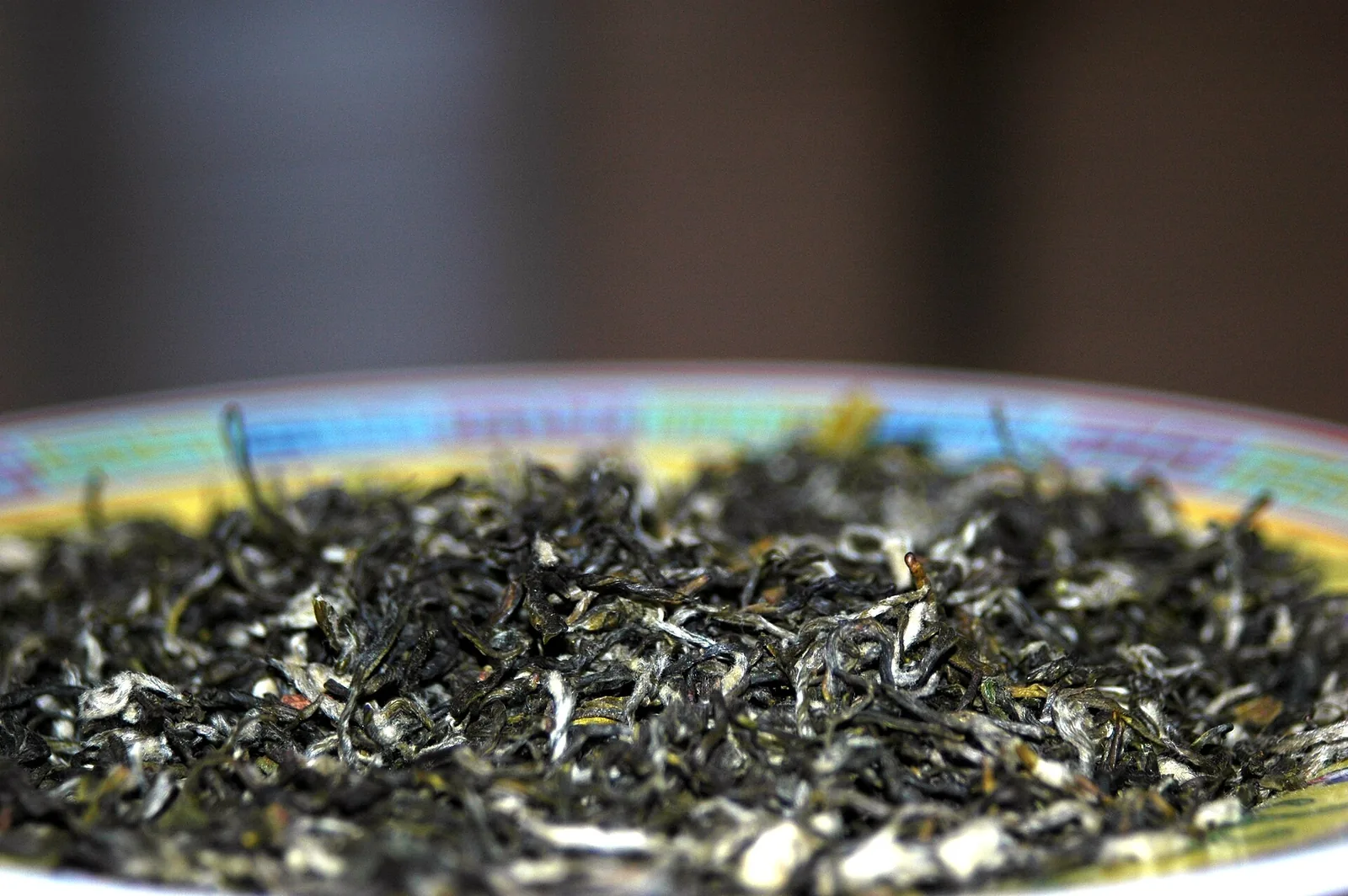
Biluochun is Suzhou’s famous green tea, grown in the hills around Dongting Lake, west of the city. The name means “green snail spring”: the leaves are rolled into tiny spirals that resemble snail shells, and the best tea is picked in early spring, before the Qingming festival. It is one of China’s ten famous teas, and it is priced accordingly.
The tea is known for its floral aroma, delicate sweetness and fresh, slightly grassy finish. The liquor is pale green or gold. The leaves are small, curly and covered in fine white hairs. A good Biluochun is light and complex; a bad one is flat, bitter or perfumed.
How to drink it
Use water around 80°C, not boiling. Put a small amount of leaves in a glass or a porcelain cup, add water, and let it steep for 1–2 minutes. Do not overbrew; the tea becomes bitter. You can refill the cup several times. The second and third infusions are often the best.
In a Suzhou teahouse, you will be served a covered cup or a small pot, often with snacks. The ritual is relaxed: sit, sip, talk, refill. It is not a formal ceremony. If you want the full experience, order a pot of Biluochun and a plate of local sweets.
The first cup is for the aroma, the second for the taste, the third for the conversation.
A teahouse saying
Buying tea
Biluochun is expensive, and the market is full of fakes and blends. Buy from a reputable tea shop or the tea area near Dongting, not from a souvenir stall. Ask to smell the leaves and see them. The best tea is picked in early spring and sold soon after; older tea loses its aroma. A vacuum-sealed packet with a harvest date is a good sign.
Prices vary wildly: a decent everyday Biluochun might be 200–500 CNY per 500 g; premium early-spring tea can be thousands. Do not pay premium prices without tasting. If a shop offers “the best tea” at a suspiciously low price, it is not the best tea.
Where to drink it
Teahouses in the old town, especially near Pingjiang Road and the gardens, serve Biluochun. Some are touristy; others are full of locals playing cards and chatting. Look for a plain room, a short tea list and a reasonable price. A pot should cost 30–80 CNY, depending on the tea.
You can also visit the Dongting tea area, west of Suzhou, where the tea is grown. It is a half-day trip, best in spring. The scenery is pleasant, and the tea is fresher, but the sales pressure can be high. Go with a local or a reputable guide if you want to buy.
Questions people ask
What does Biluochun taste like?
Floral, sweet and fresh, with a slight grassiness and a long finish. The liquor is pale green or gold. Good Biluochun is delicate, not bitter.
How much does Biluochun cost?
A pot in a teahouse costs 30–80 CNY. Loose tea starts around 200 CNY per 500 g for everyday quality and rises sharply for early-spring premium tea.
How do I brew Biluochun?
Use water around 80°C, a small amount of leaves, and steep for 1–2 minutes. Do not use boiling water or overbrew. Refill the cup several times.