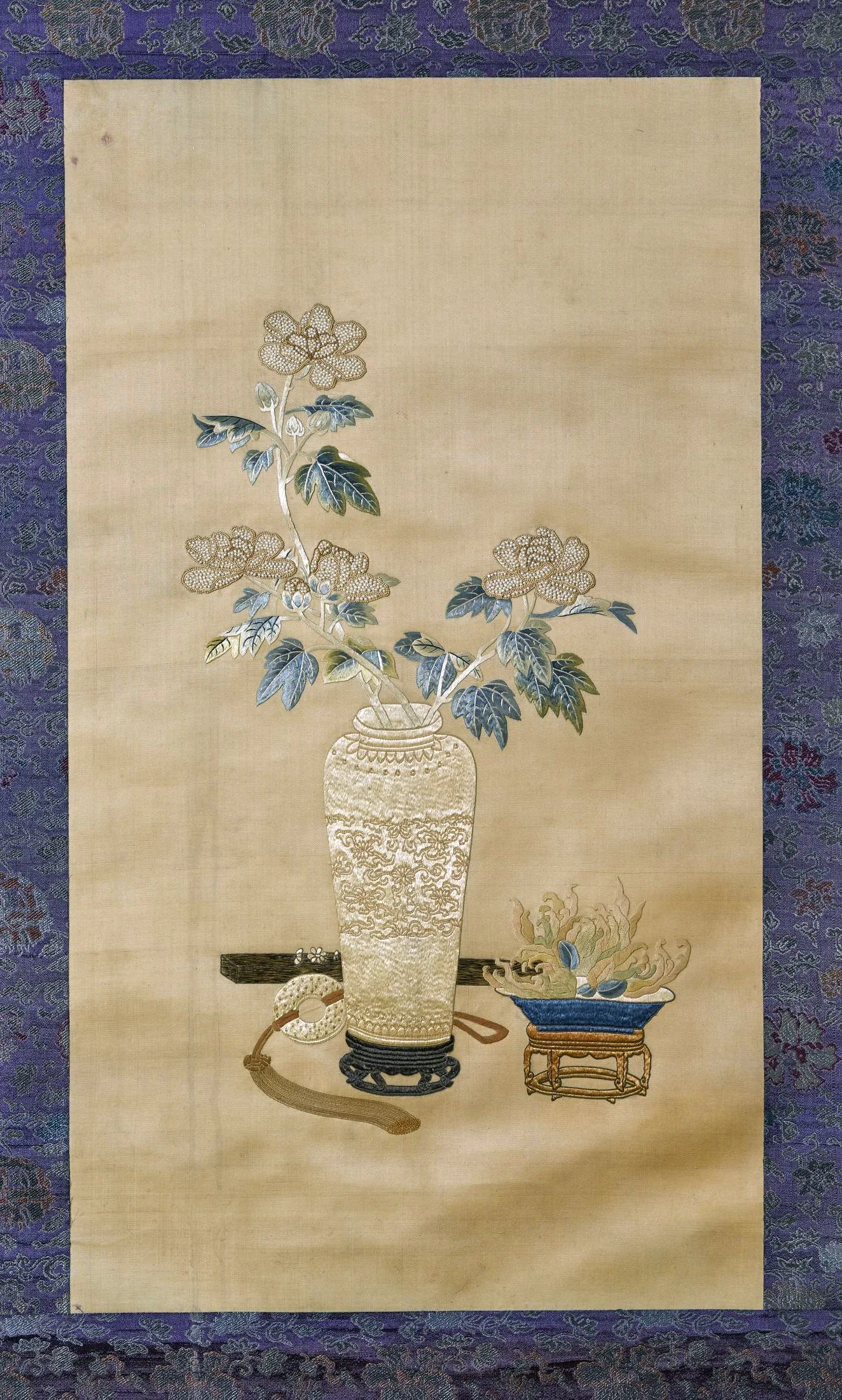
Zhenhu is a town on the western edge of Suzhou, near Taihu, where embroidery is not a heritage performance but a local industry. The main street is lined with embroidery shops and workshops; the town’s own figures put the number of embroiderers in the thousands. You will see finished pieces, half-finished frames, machine setups, thread suppliers and the ordinary commerce of a craft town.
It is not a picturesque water town. It is a working place with a tourist component. That is exactly why it is useful: you can compare hand work, machine work and everything in between in a single afternoon, and you can see how the trade actually operates. If you only want a quiet museum, stay in the city. If you want to understand the market, come here.
Getting there
Zhenhu is about 25 km west of the old town, in the High-tech District. A taxi or ride-hailing car is the simplest option: roughly 40–60 minutes depending on traffic, and the fare is modest by European standards. Public transport is possible — tram line 1 runs towards the area, and local buses connect the last stretch — but it takes longer and is less convenient if you are carrying purchases. Check the current tram and bus routes before you go; the network changes.
If you are combining Zhenhu with Taihu, a car for the day is worth considering. The town sits near the lake and the wetland areas, and the roads between are not designed for casual walking. Do not try to squeeze Zhenhu and a water town into the same half-day; they are in different directions and both deserve time.
What to see
The China Embroidery Art Museum is the anchor: a national 4A-level specialised museum with around 5,000 square metres of display space, covering the history and techniques of Chinese embroidery with a focus on Su work. Tickets are around 30 CNY, opening hours are typically 09:00–16:30 with last entry at 16:00, and the museum uses timed real-name reservations; book at least a couple of hours ahead, and confirm the current rules. The building and gardens are pleasant, and the collection gives you a benchmark before you walk the street.
The embroidery street — Xiupin Street — runs for about 1.3 km and is lined with several hundred shops. Some are galleries with serious pieces; some are workshops; some sell machine-made souvenirs by the rack. Walk the whole street before you buy anything. The first shops you see are not necessarily the best or the cheapest, and the pressure is lower once you have seen the range.
Several shops offer short hands-on sessions: a small hoop, a simple motif, an hour or two with someone guiding your needle. This is a good activity for children or for anyone who wants to feel how difficult the basic stitch is. It is not a masterclass, and it is not cheap for what it is, but it changes how you look at the finished work. Confirm the price and duration before you sit down.
Buying in Zhenhu
The advantage of Zhenhu is range and price. The disadvantage is that the same street sells hand work, machine work, printed silk and hybrid pieces, often with the same vocabulary. The tests are the same as anywhere: look at the back, hold the piece to the light, examine the edge, ask how long it took, and be suspicious of a price that does not match the labour.
- Ask directly: hand-stitched or machine-embroidered? A clear answer is a good sign.
- Ask how long the piece took. “Two days” for a large panel is not a hand-work answer.
- Turn it over. The reverse should be clean, without glue or backing paper.
- Check the edge and the mounting. Hand-finished pieces are usually bound in silk.
- Compare three shops before buying. The first price is rarely the best price.
- Ask for a receipt and a written description of the technique and materials.
- Do not buy a “masterpiece” in a hurry, and do not let a certificate replace your eyes.
Prices for genuine hand work are still prices for time. A small hand-embroidered piece may start in the low hundreds of CNY; a serious framed panel runs into the thousands; a double-sided screen can be tens of thousands. Machine work is cheaper and should be priced as machine work. The fact that a shop is in Zhenhu does not guarantee anything.
One more thing: the town is a reminder that Su embroidery is not a single artisanal idyll. It is an industry with workshops, suppliers, middlemen, tourists and machines. The best pieces come out of that system, but so do the worst. Knowing the difference is the whole point of the visit.
Questions people ask
Is Zhenhu worth visiting?
Yes, if you care about embroidery or plan to buy. The museum and the embroidery street give you a realistic view of the trade. If you only want a souvenir, the old town is easier.
How do I get to Zhenhu from Suzhou?
A taxi or ride-hailing car takes about 40–60 minutes. Tram line 1 and local buses also serve the area but take longer. Check current routes before you go.
Is embroidery cheaper in Zhenhu?
Often, especially for hand work bought directly from a workshop. But machine work is also plentiful, and tourist pricing exists. Compare shops and use the authentication tests.
Can I try embroidery in Zhenhu?
Several shops offer short hands-on sessions with a small hoop. Confirm the price and duration first. It is a good introduction, not a full course.