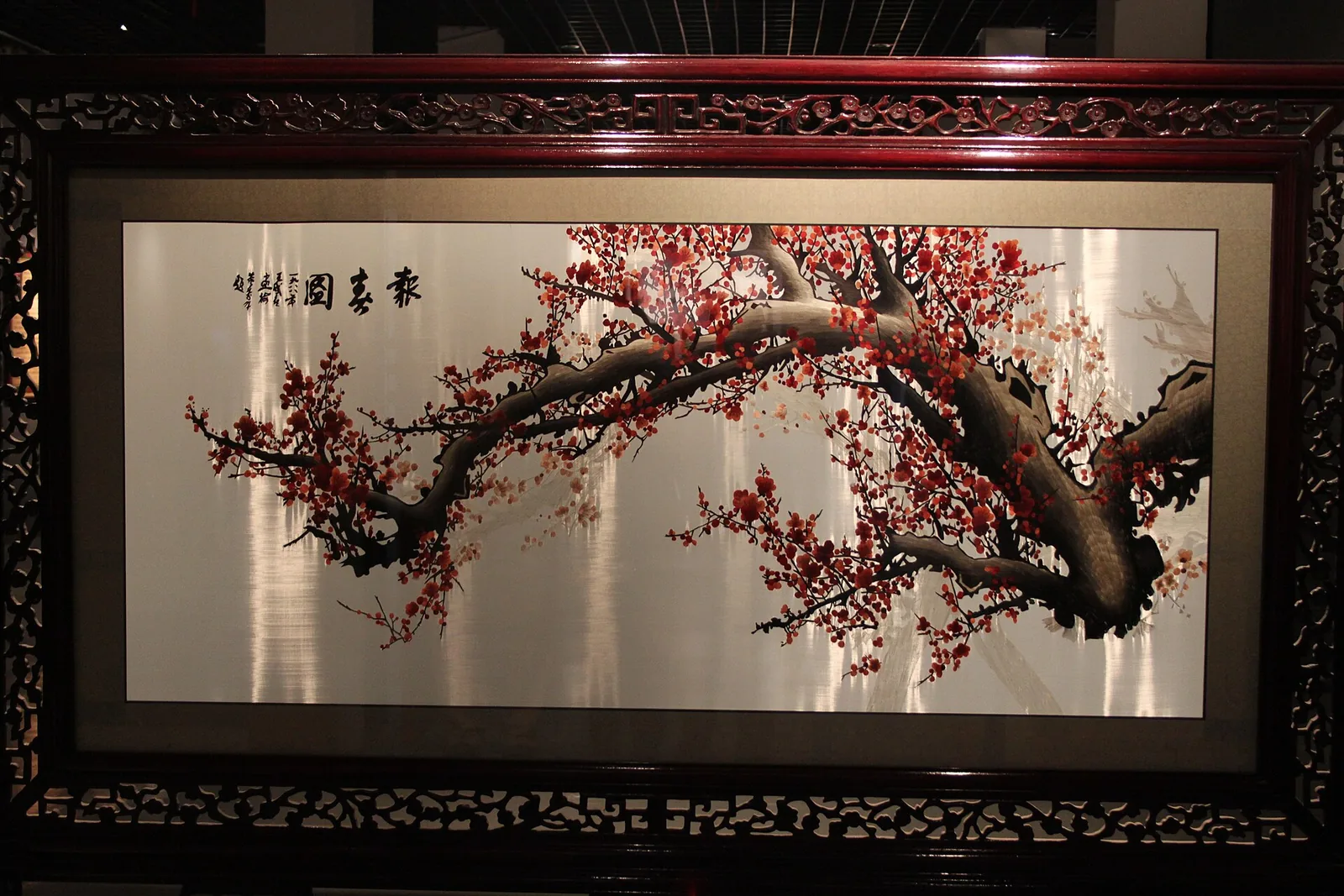
Suzhou has no single, world-class embroidery museum in the old town. What it has is better in some ways: a working research institute inside a classical garden, a strong craft collection in the newer museum, a silk museum that explains the material, and workshops where you can watch the actual labour. Put the essential pair together and you have a proper half-day; add the Silk Museum and a studio and it becomes a full day.
The essential pair
Start at the Suzhou Embroidery Research Institute, whose institutional roots go back to the 1950s and which is still based at the Huanxiu Villa garden on Jingde Road. The garden is a UNESCO-listed classical garden with a famous Taihu rockery; the institute occupies part of the compound. The embroidery side, with its display rooms, working embroiderers and sales room, is usually free to enter; the garden’s rockery has a separate ticket, around 15 CNY. Hours vary by season; the garden is typically open from 7:30, with last entry in the late afternoon. Confirm the current arrangement at the gate before you go.
The pleasure here is proximity. You see the frame, the threads, the reference drawing and the person working. Ask before photographing anyone, and do not lean over a frame. The display rooms may prohibit photography; follow the signs. If a piece interests you, ask about the technique and the time it took. The staff are used to curious visitors, but they are not a performance.
The second stop is the Suzhou Museum West Branch, in the High-tech District near Shishan Square. Its second-floor Suzhou Crafts Gallery covers jade, bamboo, wood, folk arts and a substantial embroidery and textile section that includes double-sided work, kesi and Song brocade. It is free, closed on Mondays, and far less crowded than the famous I. M. Pei museum in the old town. This is the best public collection for understanding where Su embroidery sits among the city’s crafts.
The context stop
The Suzhou Silk Museum, near the North Temple Pagoda, explains the material that made the craft possible: mulberry worms, reeling, weaving, dyeing and finishing, with working looms. It is not an embroidery museum, but it answers the question of why Suzhou and not somewhere else. Allow an hour, and combine it with the pagoda and a walk in the northern old town.
The Suzhou Museum in the old town occasionally shows textiles in temporary exhibitions, but its permanent collection is not the place to go for embroidery. Check the exhibition schedule if you are already visiting; do not build a day around it.
Working studios and shops
Pingjiang Road, Shantang Street and the lanes around the old town are full of shops selling “Suzhou embroidery”. Some are genuine studios with one or two embroiderers at work; many are retail fronts for machine goods. The difference is visible: natural light, half-finished pieces, loose threads, reference drawings, a person actually stitching. If every item is identical, shrink-wrapped and lit by fluorescent tubes, keep walking.
A studio visit is not a museum visit. You are in someone’s workplace. Ask before taking photographs, do not touch the silk, and do not bargain hard over a piece that took months. If you are not buying, say so politely and leave; that is normal. If you are buying, the authentication tests in the next guide apply.
The essential pair fits into half a day. The table below is the full circuit, including the Silk Museum and a studio: a full day, not a half. If you are short of time, cut the Silk Museum and give the hour to the institute.
| Time | Place | Why |
|---|---|---|
| 08:30 | Huanxiu Villa and the Research Institute | Garden first, then the frames before the crowds |
| 10:30 | Walk Jingde Road | Old shopfronts, tea, a slower street |
| 11:30 | Suzhou Museum West Branch | The best public craft collection; book the free ticket |
| 14:00 | Suzhou Silk Museum | The material and the industry behind the art |
| 16:00 | Old town studio or tea | Look, ask, buy only if sure |
If you only have two hours, choose the Research Institute and one studio. Zhenhu, the embroidery town on Taihu, is a separate half-day west of the city, not an add-on to this route; it deserves its own guide.
Questions people ask
Where can I see Su embroidery in Suzhou?
The Suzhou Embroidery Research Institute inside Huanxiu Villa is the best place to see live work. The Suzhou Museum West Branch has the strongest public collection. The Suzhou Silk Museum explains the material.
Is the Embroidery Research Institute free?
The embroidery display and sales side at Huanxiu Villa is usually free. The classical garden and its rockery carry a separate ticket, around 15 CNY. Confirm the current arrangement at the gate; hours vary by season.
Can I watch someone embroider?
Often yes, at the Research Institute and at working studios. Ask permission before photographing, keep your distance from the frame, and do not touch the silk.
Is the old Suzhou Embroidery Museum still open?
The collection has moved to the Suzhou Museum West Branch. The Wang Ao Shrine at 274 Jingde Road is now a heritage site, not an embroidery museum. Old guidebooks are out of date.