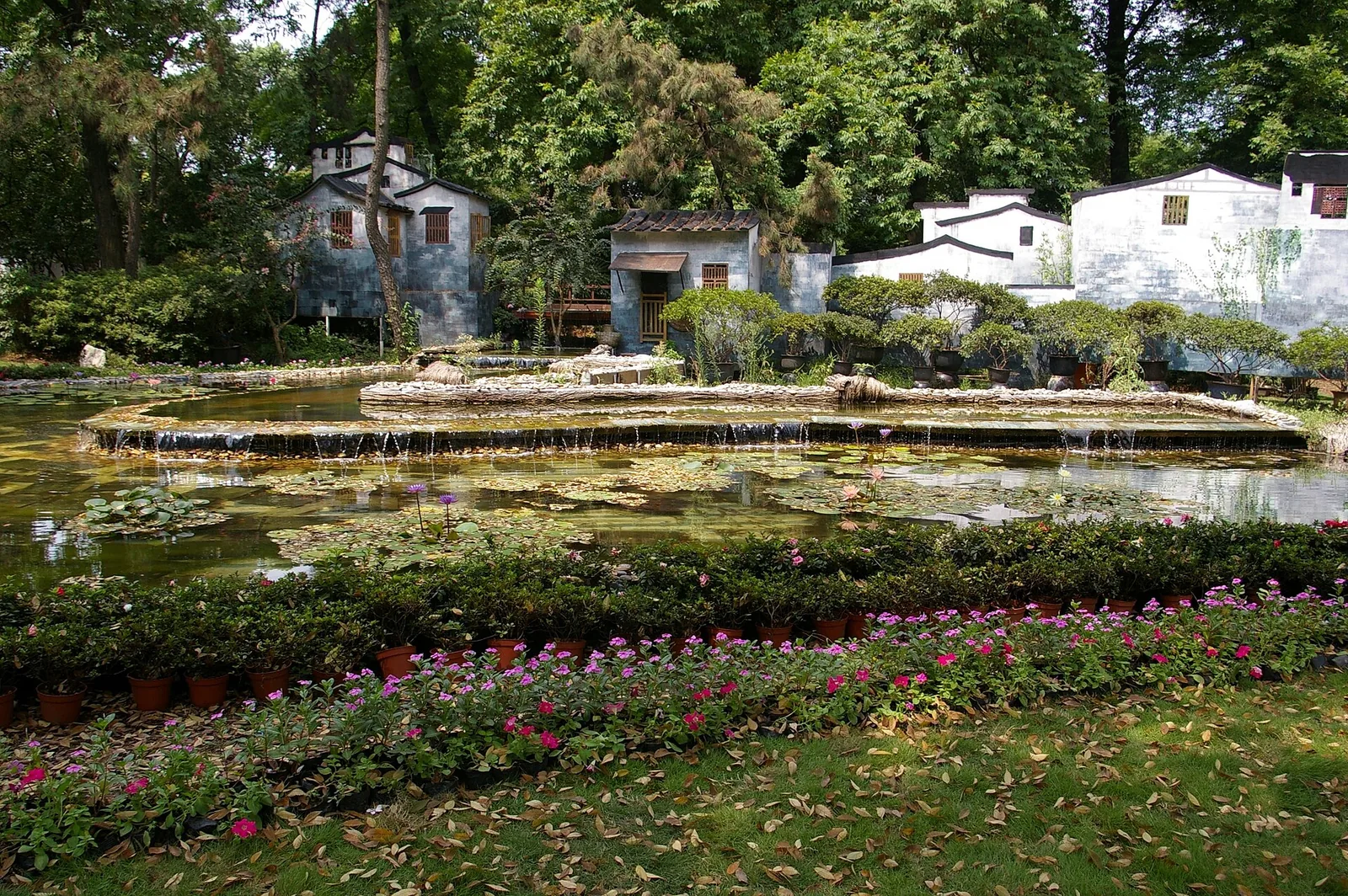
The Humble Administrator’s Garden is the big one. It is the largest classical garden in Suzhou, the one on the postcards, the one every tour group visits, and the one that will make you understand why people care about gardens at all — if you get there early enough. Arrive at 10:30 on a spring Saturday and you will spend more time negotiating selfie sticks than looking at pavilions.
The garden was begun in 1509 by Wang Xianchen, a retired government official who took a line from a classical poem about irrigating a garden and growing vegetables. The name is a piece of literati modesty: a grand garden pretending to be a small retirement plot. Over the centuries it was divided, rebuilt, and reopened. The east, central, and west sections you walk through today are the result of that long, untidy life.
You do not need to know any of this to enjoy it. But a little context changes what you notice. This is not a park with flower beds. It is a sequence of rooms, views, and framed pictures, designed by someone who assumed you would walk slowly and look sideways.
Why this garden first
If you have never visited a classical Suzhou garden, start here. The Humble Administrator’s teaches the whole vocabulary in one go: the pond as the centre of the world, the pavilion placed to be seen rather than to see from, the corridor that controls your pace, the rockery that suggests a mountain, the window that turns a wall into a painting.
It is also the most forgiving garden for a first visit. The paths are mostly level and wide. There are plenty of places to sit. The exits are clear. And because it is so large, it can absorb a crowd better than the smaller gardens — up to a point.
The route I would take
Most visitors enter from the northeast side, walk straight into the central garden, and never leave the pond. That is a mistake. The garden is made of three parts, and the sequence matters. Here is the route I would follow.
- Enter and go east first. The east garden is the least crowded and the most open. Walk the paths beside the water, look back at the walls, and let your eyes adjust. Do not stop for photographs yet.
- Pass through the residential halls. The sequence of courtyards and dark wooden rooms is a reminder that this was a house before it was a monument. Notice how the garden appears in slices through doorways.
- Enter the central garden from the north side. This is the reveal. The pond opens up, the pavilions arrange themselves around it, and the city disappears. Stand still for a minute before moving.
- Walk the west bank first. Go past the Lotus Breeze Pavilion and the Small Flying Rainbow Bridge, then around to the Fragrant Isle. The views back across the water are the ones worth keeping.
- Climb to the Wave-Gazing Pavilion if it is open. The raised view shows you the whole composition: water, corridors, roofs, and the borrowed skyline beyond the wall.
- End in the west garden. The Hall of Thirty-Six Pairs of Mandarin Ducks, with its different lattice windows, is the quietest reward. Most people never get this far.
The whole loop takes about two hours at a normal pace. If you stop for tea, or wait for a pavilion to empty, allow three. If you are with children or older travellers, cut the west garden and do the central loop only.
The three moments worth waiting for
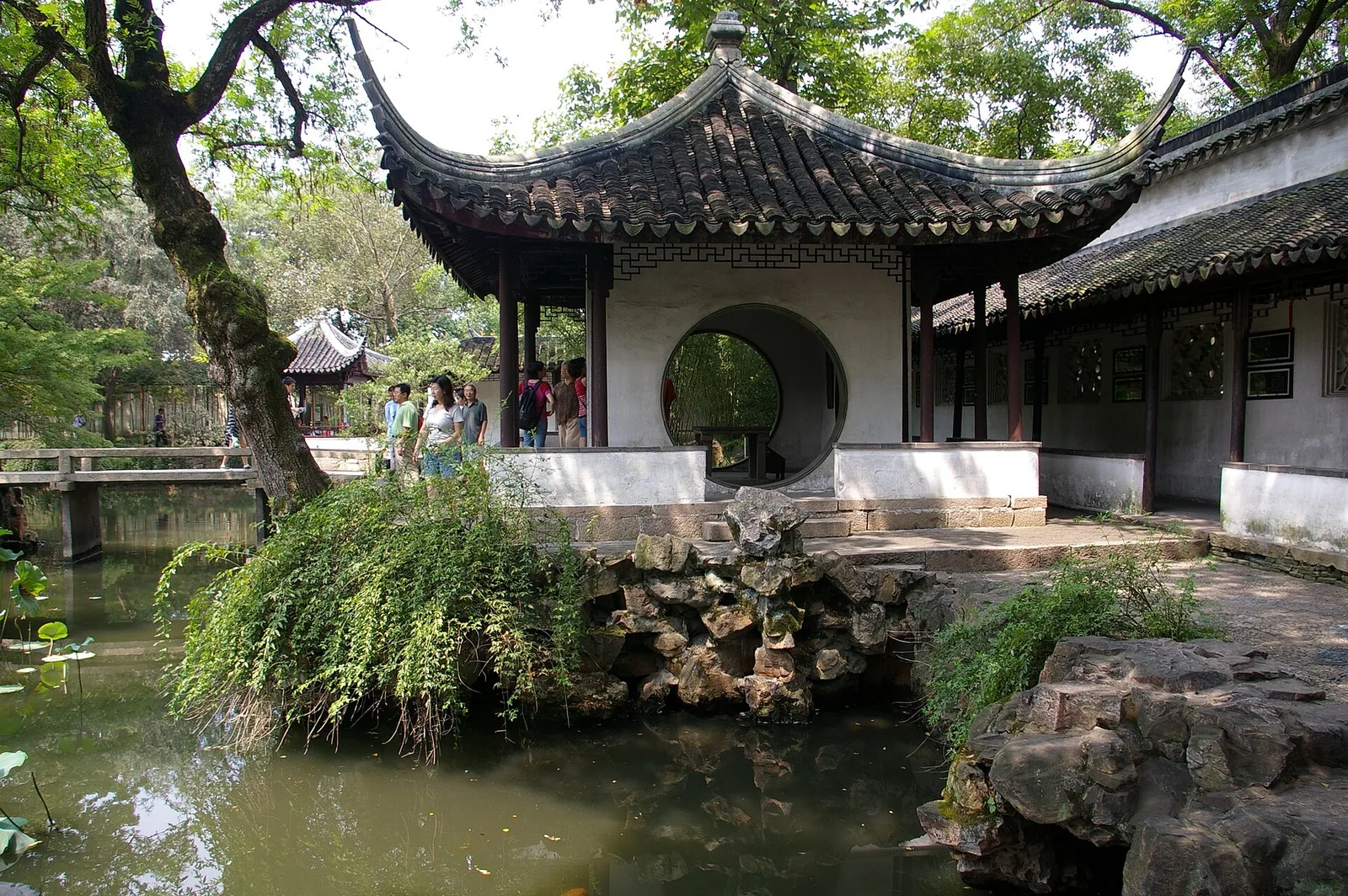
The garden is full of small compositions, but three are worth a deliberate pause. The first is the view from the Fragrant Isle back toward the Lotus Breeze Pavilion, especially in the first hour when the water is still. The second is the corner of the pond near the Small Flying Rainbow Bridge, where the corridor, the water, and the roofline line up. The third is the Hall of Thirty-Six Pairs of Mandarin Ducks in the west garden, where every window has a different lattice pattern and a different slice of greenery behind it.
A Suzhou garden does not give you the whole view at once. It gives you a corner, then another corner, then the memory of both.
A note from the editor
Tickets, hours, and the booking layer
The garden is usually open from 7:30 to 17:30, with last entry around 30 minutes before closing. Hours shift slightly by season, and maintenance closures happen. Check the official channel the day before you go. Tickets are around 80 CNY in peak season (roughly April–May and July–October) and 70 CNY at quieter times. Children and some concession groups are free or reduced; bring a passport for adult tickets.
Real-name reservation is now part of the visit. Book through the official Suzhou garden booking channel or at the visitor centre, and carry the passport you booked with. Foreign passports usually work at the staffed counter or self-service machines, but the process is smoother if you book a day ahead. In spring, autumn, and public holidays, book as soon as your date is fixed.
| Time | What it feels like | What to do |
|---|---|---|
| 7:30–9:00 | Quiet, cool, best light | Central garden and pond |
| 9:00–10:30 | Busy but manageable | West garden and windows |
| 10:30–14:00 | Tour groups at full volume | Leave, or go to the museum |
| 14:00–16:00 | A second wave, softer light | Corridors and tea |
| 16:00–17:00 | Thinning out, closing soon | One last loop |
How to avoid the worst of the crowd
The single best move is to arrive at opening. The second is to walk away from the entrance while everyone else walks toward the pond. The third is to skip the central pavilion at midday and come back late afternoon. Tour groups tend to follow the same loop in the same order; if you reverse it, you will spend long stretches alone.
Headphones and a guided audio tour can help, but the garden is better with your own eyes. If you want context, read one short article before you arrive rather than listening to a narration for two hours. The point is to look, not to consume information.
Who it suits — and who it does not
This garden suits first-time visitors, garden lovers, photographers who can get there early, and anyone who wants the full classical-garden vocabulary in one place. It is level enough for most older travellers, though the distances are real. Benches are plentiful.
It does not suit anyone who wants silence at 11:00, travellers with very limited time who could see a smaller garden in half the time, or people who find crowds genuinely distressing. In those cases, the Lingering Garden is the better first choice; the Master of the Nets is the better evening choice.
What to pair it with
The Suzhou Museum is next door and free, but needs its own reservation. The Lion Grove Garden is a five-minute walk and a complete contrast: a rockery maze rather than a water composition. Pingjiang Road is a 15–20 minute walk south, good for lunch after the garden. The North Temple Pagoda is nearby if you want the view from above.
If you are doing two gardens in one day, pair the Humble Administrator’s with the Master of the Nets in the late afternoon or evening. The first is grand and public; the second is small and intimate. The contrast is the point.
Questions people ask
How long should I spend at the Humble Administrator’s Garden?
Two hours is enough for the main loop; two and a half to three hours if you want the west garden, tea, and time to sit. Most visitors spend about 90 minutes and miss the quietest part.
Do I need to book tickets in advance?
Yes in practice, especially in spring, autumn and Chinese public holidays. Book through the official Suzhou garden channel with your passport details. Same-day tickets may be available, but do not rely on it.
What is the best time of day to visit?
The first hour after opening. The light is softer, the tour groups have not arrived, and the central pond is still. Late afternoon is the second-best window.
Is the garden accessible for older travellers?
Most of the main paths are level and there are many seats, but the garden is large and some bridges and pavilion steps are uneven. A compact loop around the central pond is manageable for most people.