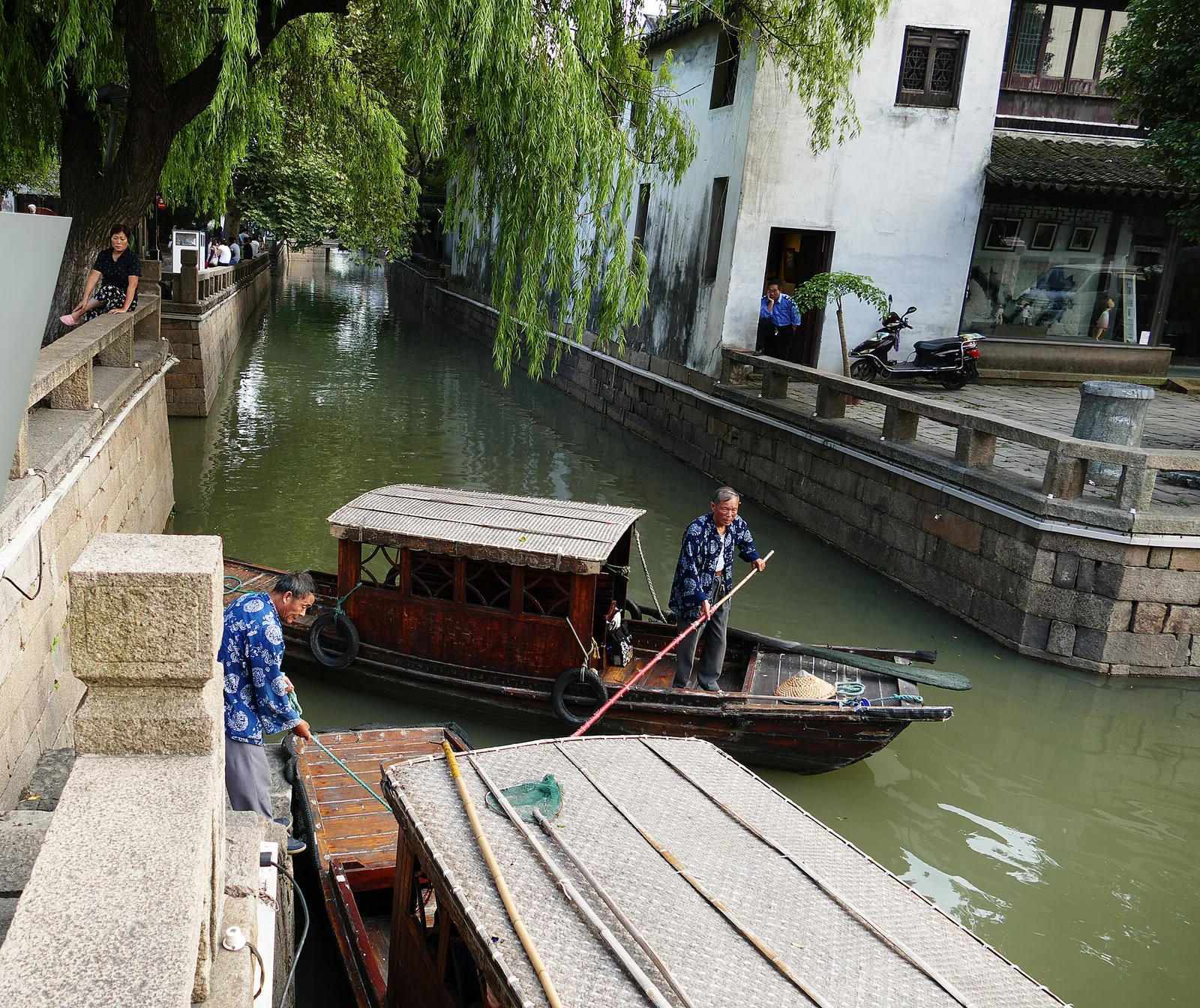
Pingjiang Road is a narrow stone lane running beside a canal, with whitewashed houses, black tiles, small bridges and willows. It is the Suzhou of the imagination, and it is also a working street with residents, schools, shops and a constant flow of visitors. Both things are true at once.
The lane follows the line of an old canal that once connected the city’s waterways. It was restored in the 2000s, not rebuilt from scratch, and the result is more convincing than most heritage streets in China. The scale is right: low buildings, narrow frontage, water at the edge. The problem is the crowd, which arrives in a wave around mid-morning and does not leave until after dinner.
The right hour
Before 9:00, Pingjiang is at its best. The shops are still shuttered, the residents are out with breakfast, and the canal reflects the sky. You can hear bicycles and conversation instead of loudspeakers. The light is soft and the lane is mostly empty.
After 19:00, it becomes a different place: lanterns, canal boats, and a slower evening crowd. It is busier than the morning but more atmospheric than midday. The worst time is 11:00–16:00 on a weekend, when the lane is a single slow-moving queue and the bridges are packed.
| Time | Mood | Advice |
|---|---|---|
| 7:00–9:00 | Local, quiet, good light | Walk the full length |
| 9:00–11:00 | Shops open, manageable | Side lanes and tea |
| 11:00–16:00 | Crowded | Escape to a garden or museum |
| 16:00–18:00 | Thinning, warm light | Bridges and canal |
| 19:00–21:00 | Lanterns, boats, dinner | Best for atmosphere |
A route that avoids the crush
Start at the south end, near Lindun Road, and walk north along the canal. Most tour groups enter from the north or from the middle, so the southern stretch is quieter. After about ten minutes, turn left into one of the side lanes: Xuanqiao Lane, Daxin Lane, or the lanes around the Kunqu Museum. These are residential alleys with old walls, doorways and small workshops. They are the real texture of the neighbourhood.
Rejoin the canal near the Couple’s Retreat Garden, which is a good mid-walk stop. Continue north to the bridge at Baijia Lane for the classic view of the canal and the houses. If you want a boat, take it from the northern end, where the queue is usually shorter.
What to eat and drink
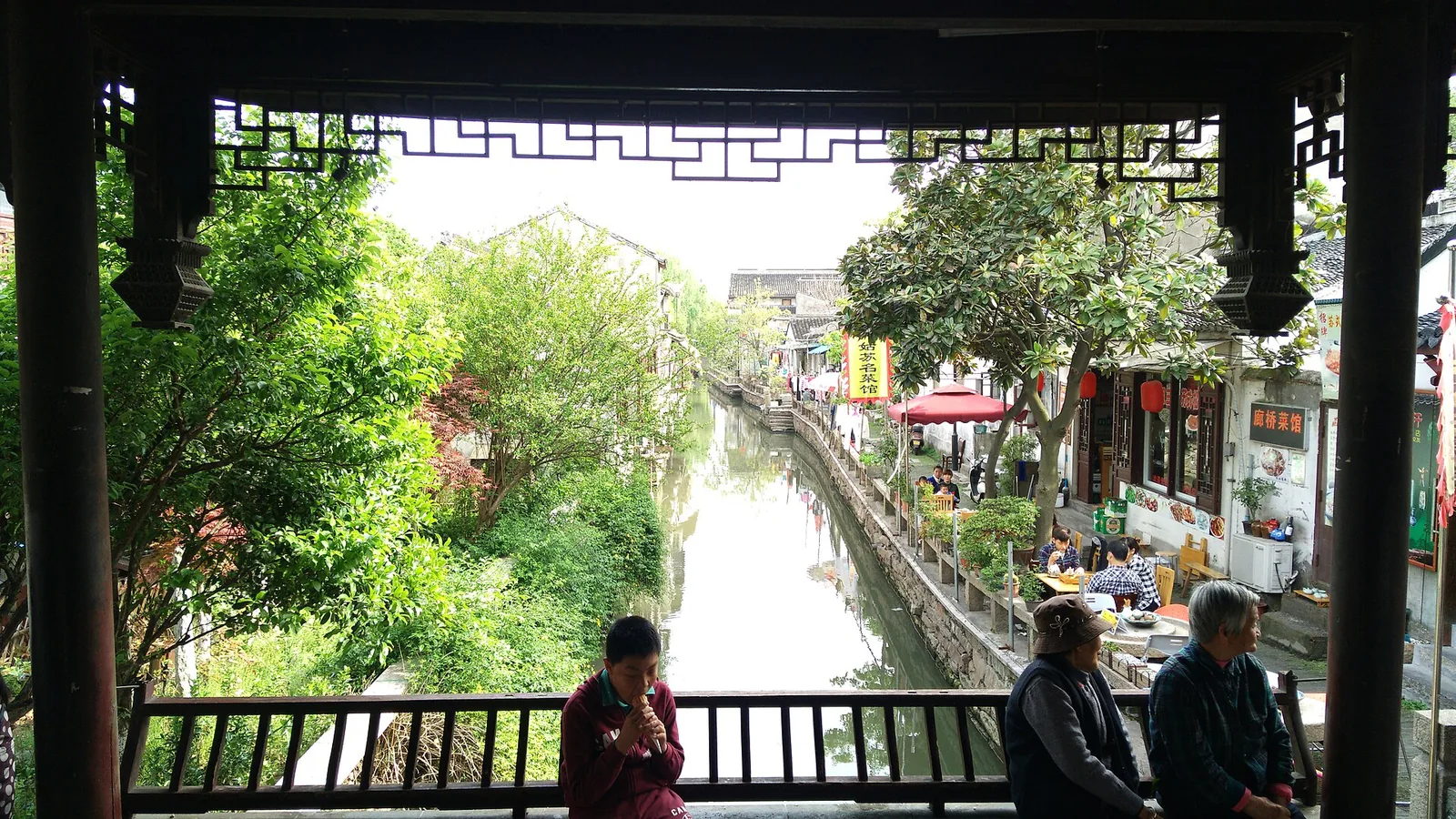
Pingjiang is not the best food street in Suzhou, but it has good snacks if you choose carefully. Look for shops selling freshly made cakes, sesame balls, or bowls of noodles with a queue of locals. Avoid anywhere with a photo menu and a tout. The tea shops are pleasant but overpriced; a small teahouse one lane back is usually better value.
What to skip
The souvenir shops selling identical fans, silk scarves and fridge magnets. The restaurants with English menus and photographs of every dish. The photo studios renting historical costumes. None of these are evil; they are just not what makes the lane interesting. Spend your time on the side streets, the bridges and the canal itself.
If you want to buy silk or embroidery, go to a proper shop or the Silk Museum instead. If you want a garden, the Couple’s Retreat is right there. If you want a quiet hour, walk one street east to the lanes around the Kunqu Museum.
Questions people ask
Is Pingjiang Road worth visiting?
Yes, but timing is everything. Go before 9:00 or after 19:00. Midday on a weekend is a queue, not a neighbourhood.
How long does Pingjiang Road take?
The main lane takes 30–45 minutes to walk. Add an hour for side lanes, a garden and a snack. It is not a full-day destination.
Are the canal boats worth it?
Once, yes, especially at dusk. Keep expectations modest: it is a short, scenic ride, not a peaceful journey through a living canal.