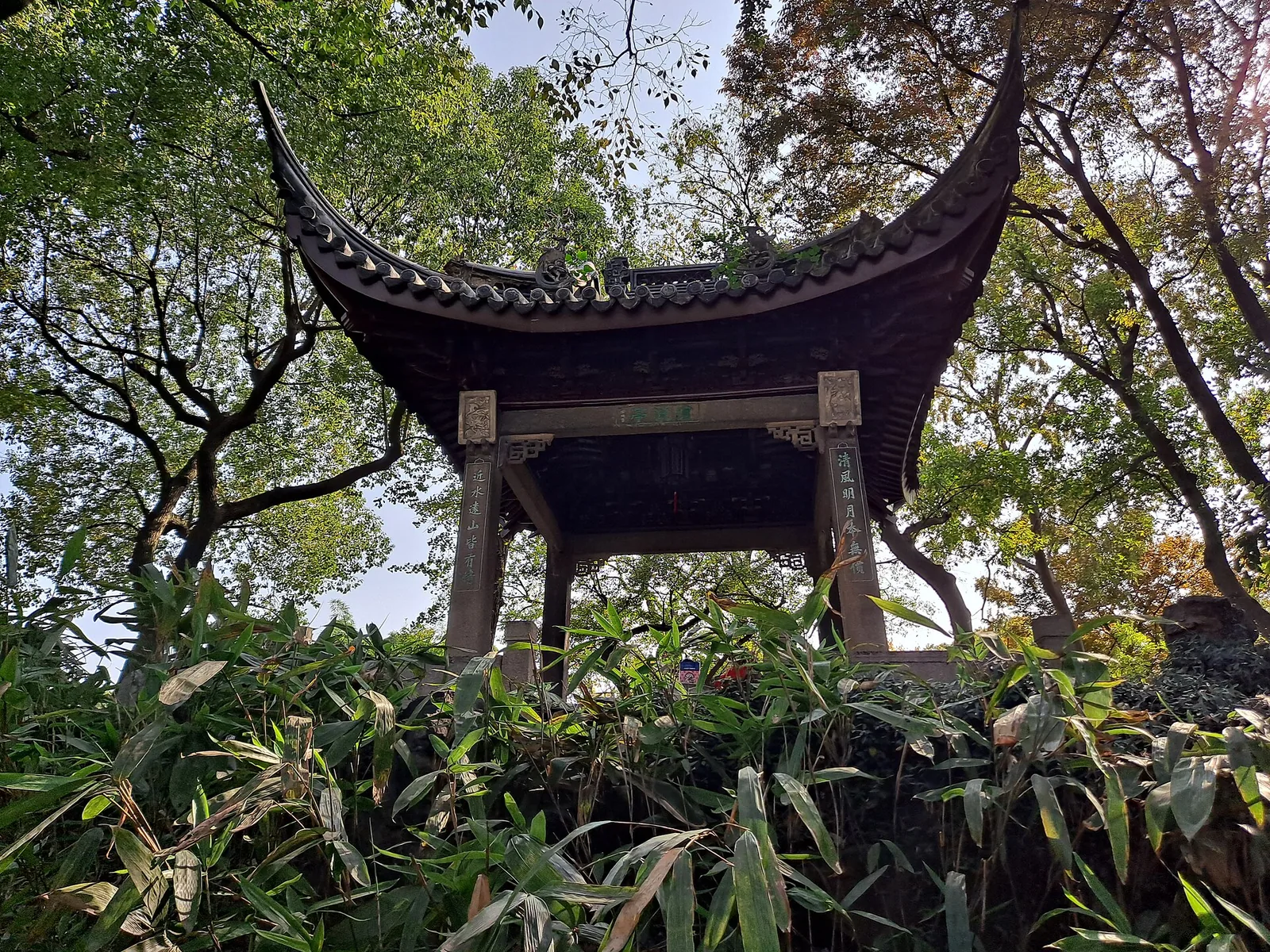
The Canglang Pavilion is the oldest surviving garden in Suzhou, founded in 1044 by the poet Su Shunqin. It is also the least famous of the major gardens, which is part of its appeal. You can walk in on a weekday morning and hear birds instead of tour guides.
The name comes from a line in the Chu Ci, an ancient poem about washing one’s hatstrings in the Canglang River when the water is clear. It is a scholar’s name: a claim to integrity, simplicity and the right to withdraw from public life. The garden lives up to it better than most.
What makes it different
Canglang is organised around a pond and a hill, with bamboo groves and a long corridor. It is less intricate than the Lingering Garden and less grand than the Humble Administrator’s. Its virtue is openness. The views are longer, the vegetation is denser, and the atmosphere is closer to a park than a private composition.
The bamboo is the signature. It grows in thick stands along the walls and around the pavilion, and it changes the sound of the garden: dry leaves, wind, birds. In summer it provides shade; in winter it stays green. The garden is worth visiting for the bamboo alone.
The route
Enter and walk around the pond first, counter-clockwise. The pavilion on the hill is the focal point, and the best view of it is from across the water. Then climb the hill for the view back over the pond and the bamboo. End in the corridor along the wall, where the framed views are quiet and easy to miss.
The garden is small enough to see in 45 minutes. Sit for ten of those minutes in the pavilion. It is one of the few gardens in Suzhou where sitting still does not feel like a competition.
When the water is clear, wash your hatstrings. When it is muddy, wash your feet. The garden is named for the freedom to choose.
After the Chu Ci
When to go
Morning is best: the light comes through the bamboo, the pond is still, and the garden is quiet. Late afternoon is also good, especially in autumn. Avoid the middle of the day in summer, when the garden is hot and the shade is crowded.
Canglang is one of the best gardens in rain. The bamboo becomes glossy, the pond dimples, and the covered corridor gives you a place to stand. It is also cheap enough to visit on a whim, which makes it a good backup when a bigger garden is sold out.
Practical notes
The garden is in the south of the old town, near the Canglang District, and is easy to reach by taxi or metro plus a short walk. Tickets are around 15–20 CNY, and booking is usually simpler than at the famous gardens. It is a good add-on to a day that includes the Suzhou Museum or the Panmen Gate.
Questions people ask
Is Canglang Pavilion worth visiting?
Yes, especially if you want a quiet garden and have already seen the famous ones. It is the oldest garden in Suzhou, cheap, central and rarely crowded.
How long does it take?
Forty-five minutes to an hour. It is small, and the pleasure is in sitting rather than covering ground.
Is it accessible?
The main paths are mostly level, but the hill and some corridors have steps. It is more accessible than Lion Grove, but not fully step-free.