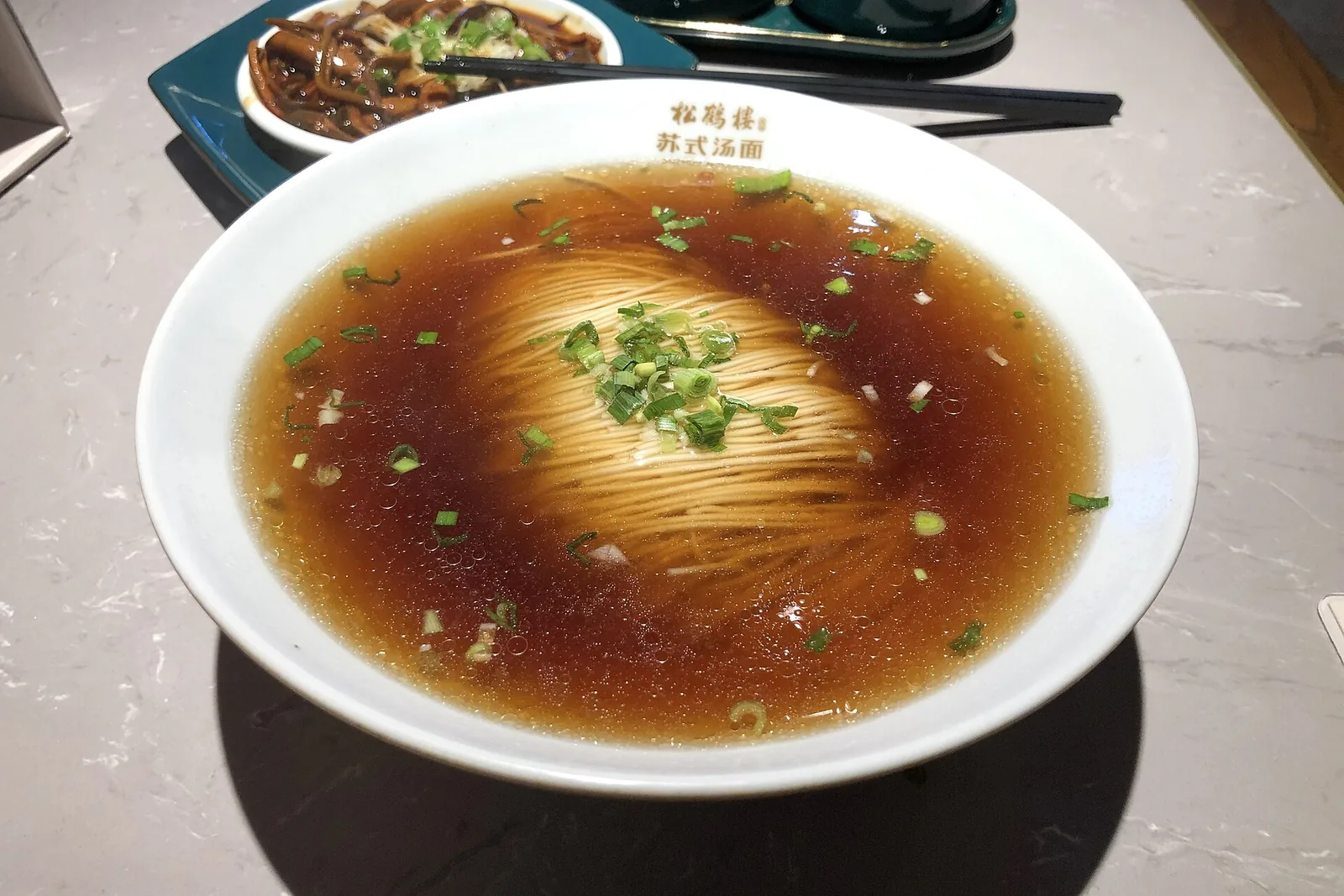
Suzhou noodles are a local institution. The broth is clear and savoury, usually pork or chicken based, sometimes with a little dried shrimp or mushroom. The noodles are thin, firm and slightly alkaline, so they stay springy in the soup. The toppings are ordered separately and placed on top or on the side: braised pork, fried pork chop, eel, river shrimp, mushrooms, pickles, or a combination.
The style is lighter and sweeter than northern Chinese noodles. The sweetness comes from the broth and the braising liquid, not from sugar dumped in. A good bowl tastes clean, savoury and faintly sweet, with a long finish. A bad bowl tastes of MSG and old oil. The difference is usually visible in the queue: locals know which shops are worth waiting for.
The vocabulary
You do not need to speak Chinese to order, but a few words help. “Mian” means noodles. “Tang” means soup. “Gan” means dry, without broth. “Hong” means red-braised, usually sweeter and darker. “Bai” means white or clear, usually plainer. Pointing at a photo or a neighbouring bowl works too.
| Topping | What it is | Order it if |
|---|---|---|
| Pork chop | Fried, marinated pork cutlet | You want something familiar |
| Eel | Braised or fried river eel | You want the local specialty |
| River shrimp | Small, sweet freshwater shrimp | You want delicate texture |
| Mushroom | Braised shiitake or mixed fungi | You want a vegetarian option |
| Pickles | Salted or pickled vegetables | You want contrast |
| Mixed | Two or three toppings | You cannot decide |
How to eat it
The toppings often arrive on a separate plate. Add them to the noodles yourself, or eat them alongside. Mix gently; the noodles are delicate and will break if you stir too hard. Add a little vinegar or chilli oil if you like. Drink the broth with a spoon, not by lifting the bowl. Slurping is fine.
A bowl of noodles is a quick meal, not a long one. Locals eat in 15–20 minutes, especially at breakfast. Do not linger over a table at peak time; the queue is part of the rhythm.
When and where
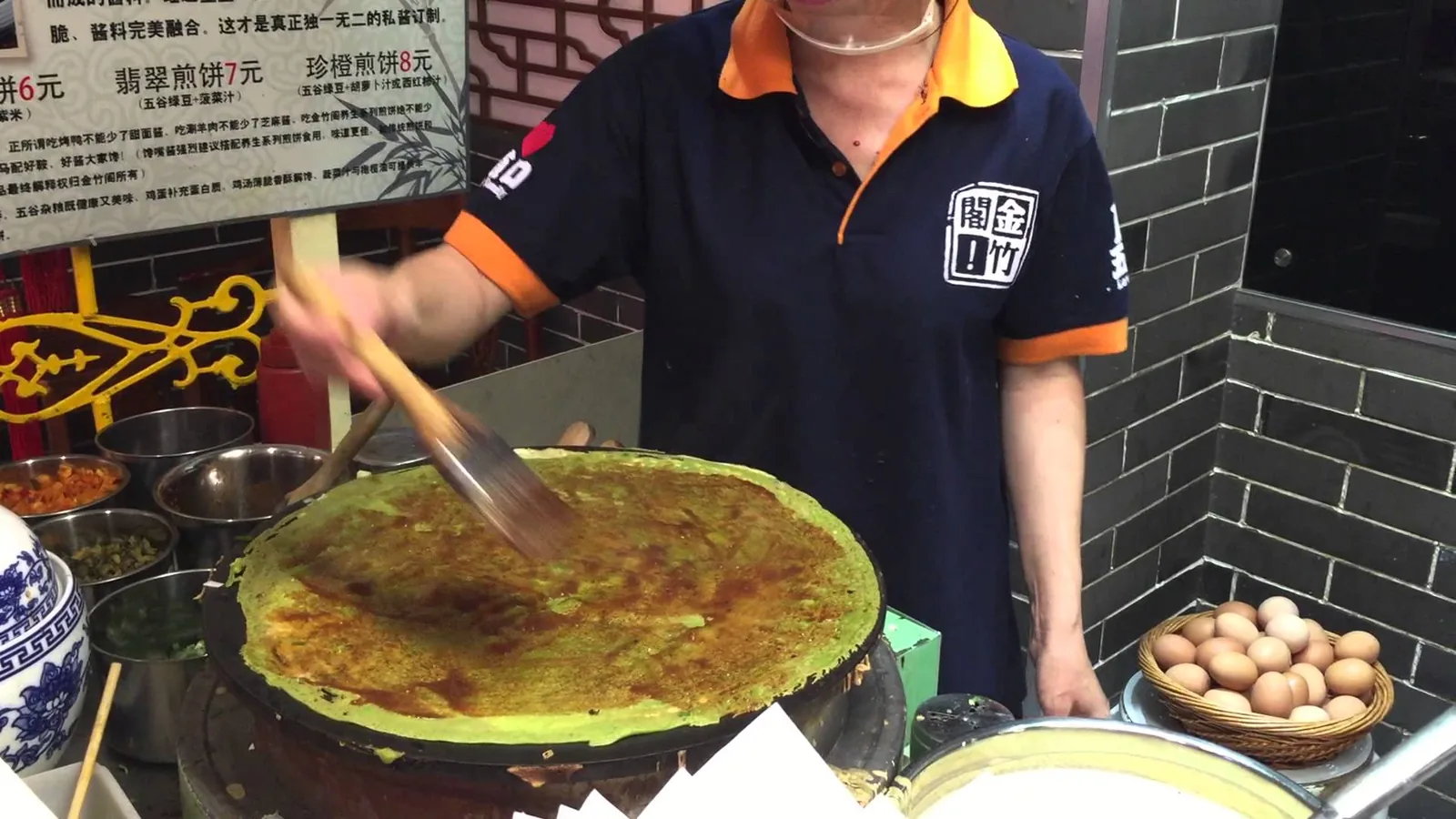
Breakfast is the classic time. Many noodle shops open at 6:30 or 7:00 and sell out of the best toppings by 9:00. Lunch is also good, especially on a cold day. Dinner is less traditional; Suzhou people tend to eat noodles earlier in the day.
Look for shops with a short menu, a visible kitchen, and a mix of locals and office workers. Avoid shops with photo menus and touts. The old town has many good options, but the best value is often in residential neighbourhoods away from the canals. A shop with plastic stools and a queue is usually a better bet than a restaurant with a host at the door.
Questions people ask
What are Suzhou noodles like?
Thin, springy wheat noodles in a clear, savoury broth, topped with braised or fried ingredients. They are lighter and slightly sweeter than northern Chinese noodles.
How much do Suzhou noodles cost?
A basic bowl costs 15–25 CNY; with a premium topping like eel or shrimp, 30–40 CNY. It is one of the best-value meals in the city.
Do Suzhou noodles contain pork?
The broth is usually pork-based, and many toppings are meat or fish. Vegetarian options exist but are limited; ask for mushroom toppings and a vegetable broth if available.