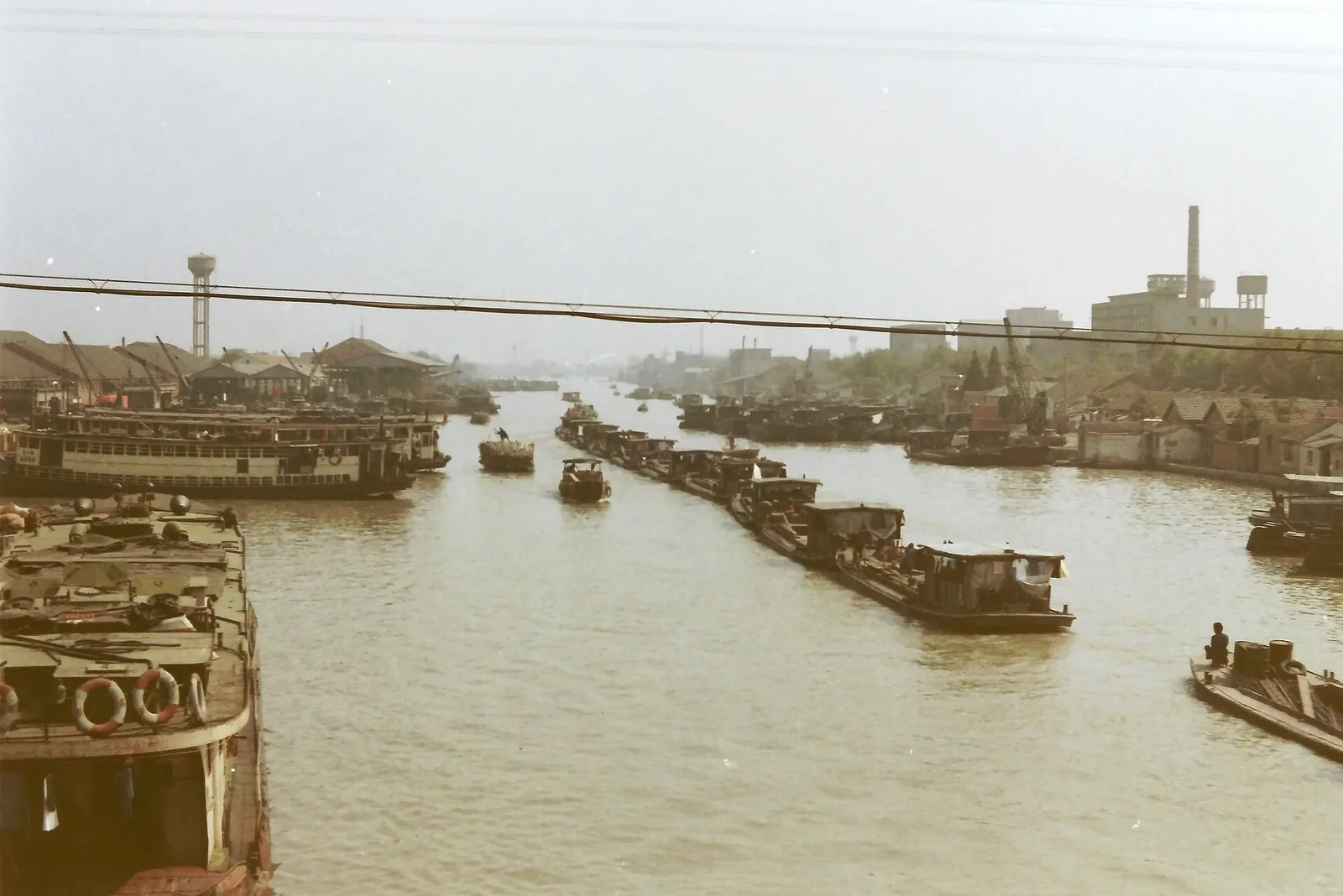
The Suzhou that visitors see is a small part of the Suzhou that exists. The old town is criss-crossed by canals, some restored, some covered, some still working. The Grand Canal runs along the western edge. The outer moat rings the city. Panmen is a surviving water gate. These are not decorative waterways; they are the infrastructure that made Suzhou rich.
The city grew around the Grand Canal, which connected the rice-rich south to the imperial capital. Suzhou became a transport and trading hub, and its internal canals distributed goods, people and waste. The gardens came later, built by the wealth that the water generated. Understanding the canals is understanding the city’s logic.
The waterways worth seeing
Pingjiang is the prettiest old-town canal, but it is a single lane. The Grand Canal is the big working waterway: wide, busy, and lined with warehouses, bridges and new development. Panmen is the best place to see how the city defended its water: a gate, a bridge, a pagoda and a stretch of wall. The outer moat is a long, quiet walk with views of the old town from the outside.
For a different perspective, take the metro to the Suzhou Bay area or walk the canal paths north of the old town. The water is still there, but the tourists are not. You will see barges, fishermen, and the ordinary life of a water city.
A short history
Suzhou’s canals date back more than 2,500 years, to the Wu state. The Grand Canal reached the city in the Sui dynasty, and the old town’s grid of streets and waterways was formalised in the Tang and Song. The city was a centre of silk, rice and tax collection. The canals were dredged, repaired and extended for centuries.
In the 20th century, many canals were filled in to make roads. In the 21st, the city restored the most historic stretches and promoted the water town image. The result is a hybrid: some canals are heritage, some are infrastructure, some are decoration. All of them are part of the same system.
The garden is the city’s poem. The canal is the city’s sentence.
A note from the editor
How to see the water city
Start at Pingjiang at 8:00 for the old-town scale. Walk to Panmen for the water gate and the wall. Take a taxi or metro to the Grand Canal for the working waterway. End at the outer moat at dusk, when the light is low and the city looks like an island.
If you have time, take a boat on the Grand Canal. The long cruises are touristy, but they show you a side of Suzhou that the gardens do not: the industrial waterway, the bridges, the warehouses, the modern skyline. It is not beautiful in the same way. It is interesting.
Questions people ask
Can you walk along the canals in Suzhou?
Yes, especially at Pingjiang and Shantang. The Grand Canal and outer moat have longer paths, but they are less continuous and less scenic in places.
Is the Grand Canal worth seeing?
If you are interested in how the city works, yes. It is not as pretty as Pingjiang, but it is historically important and still active. Panmen is the best access point.
How many canals are left in Suzhou?
Dozens of stretches remain, though many were filled in during the 20th century. The old town still has a recognisable water grid, and the Grand Canal and moat remain major waterways.